The PM's Definition of Done Is Wrong
Ask a PM when a feature is done. They will say something like: "When it ships. When the PR merges. When it passes QA and goes to production." That is the engineering definition of done, dressed in PM language. It describes the moment when engineering's job ends, not when the feature has actually accomplished anything in the world.
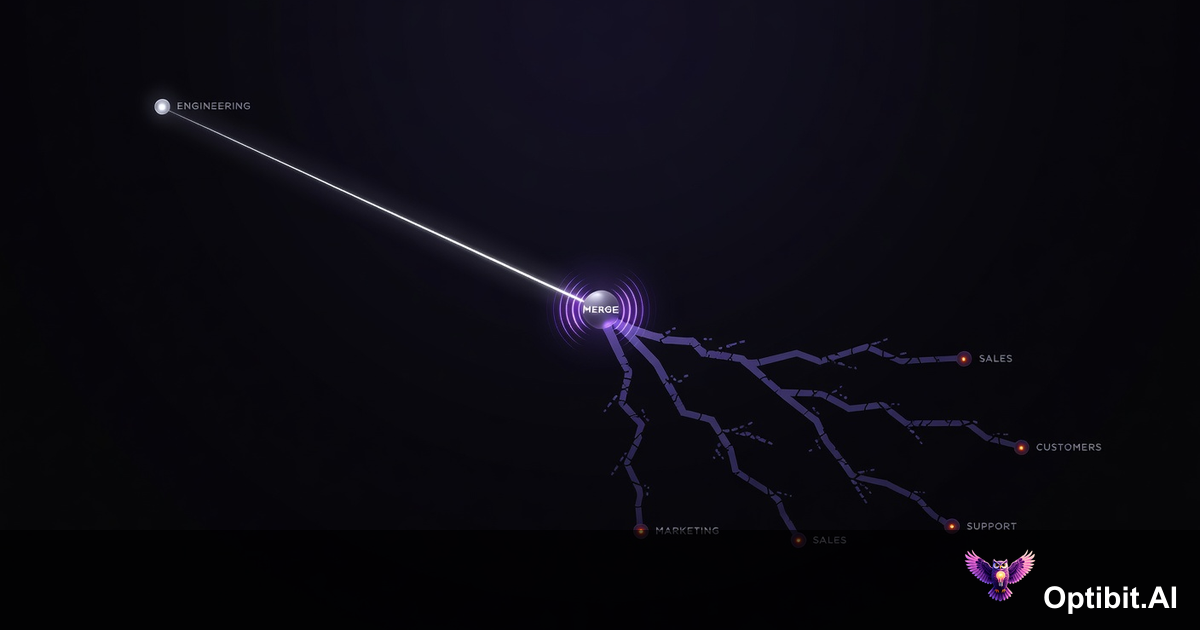
Here is the problem. When that PR merges, marketing does not have what it needs to market the feature. Sales does not understand it well enough to sell it. Support has not been briefed and will improvise when the first customer asks about it. And the customer base, the people this feature was built for, has no idea it exists. The feature is "done" but it has not been launched, communicated, positioned, or enabled. It is code in production that nobody outside the engineering team can act on.
This is not a communication problem or a coordination failure. It is a structural problem built into how product teams define their own success. The definition of done draws a line at the technical moment of completion and treats everything downstream as someone else's problem. That line is costing your company revenue on every release.
The Line in the Sand Engineering Drew
The engineering definition of done comes from Agile and it makes complete sense in that context. A user story is done when the acceptance criteria are met and the code ships. Clean. Verifiable. Moves the board forward. Nobody is arguing with that definition for its intended purpose.
The problem is that product management adopted this definition wholesale and forgot to add the second half. Engineering done is a technical checkpoint. It says nothing about whether the organization is ready to support, sell, or communicate the thing that just shipped. Those are different activities with different timelines, different stakeholders, and different failure modes.
When the PM closes the ticket and calls it done, it signals to the rest of the organization: this is no longer a priority. Resources shift to the next sprint. The sprint review happens and attention moves on. The feature sits in production, technically complete, waiting for a GTM motion that nobody officially owns because the PM just declared it done.
Marketing Is Not Ready
When a feature ships, the marketing team typically gets one of the following: a Slack message, a line item in a sprint review they may or may not have attended, or a brief async summary written by an engineer describing the technical change rather than the customer value. None of these are sufficient to produce the content marketing actually needs.
To position a feature effectively, marketing needs to understand why the feature was built, what customer problem it solves, how it compares to how competitors solve the same problem (or don't), and what proof points exist from beta users or early adopters. They need to know whether this is a headline feature worth a standalone announcement or a background improvement worth a changelog entry. They need to know the target audience and the specific use cases.
Almost none of that lives in the PR that just merged. It might live in the original product spec, somewhere in Confluence or Notion, buried under months of comment threads. The PM knows it. The engineer who built it might know pieces of it. Marketing has to go hunting for it, usually after the PM has mentally moved on to the next sprint and stopped thinking about this feature.
The result is that most feature launches are either delayed (while marketing tracks down context they should have had at merge time), diluted (because they went to market with partial information), or skipped entirely (because by the time the context-gathering effort is complete, three more features have shipped and this one is no longer timely). The feature is done. The marketing is not, and it may never be.

Sales Cannot Sell What They Do Not Understand
Sales reps sell what they know. That sounds obvious, but the implication is significant: features that are not effectively communicated to sales simply do not get sold. They exist in the product, they may even show up in demos, but the rep cannot tell a compelling story about them, cannot answer detailed questions about them, and cannot use them to address objections in competitive deals.
The communication breakdown between product and sales is well-documented and almost universally acknowledged as a problem. What is less acknowledged is why it persists. The answer is the definition of done. When the PM closes the ticket, the feature is no longer anyone's active responsibility. Sales enablement content gets written when someone has time. Battle cards get updated when the PMM gets to it. Training sessions get scheduled when they can get on the calendar.
These are all reactive processes triggered by nobody in particular, on no fixed schedule, with no accountability to a deadline. The feature is done. The enablement is on the backlog. The sales team goes into the next prospect call without the context they need to close it, and the PM has already moved on to the next feature.
The competitive deal that should have closed
A mid-market deal, late stage. The prospect is comparing your product against a competitor that has historically had stronger integration capabilities. Three months ago, your team shipped a major update to exactly those integrations. The PM called it done. Slack message went out.
The rep on this deal was in three demos that day. The Slack message got a reaction emoji. The integration update never made it into the rep's head as a usable talking point. In the final evaluation call, the prospect asks about integration depth. The rep describes the pre-update state, because that is what they were trained on. The competitor wins on integrations.
Post-mortem says: "lost on integrations." The integrations were there. They just were not in the rep's head at the moment they needed to be.
Support Is Flying Blind
Support is the function most immediately damaged by the narrow definition of done. When a feature ships without an accompanying support brief, the first customer who asks about it reaches a support agent who knows roughly as much about it as anyone who read the changelog. Which is often nothing, or close to it.
The support agent improvises. They find the feature in the product, poke around, maybe search internal documentation that does not yet exist for this feature, and piece together a response. Sometimes they get it right. Sometimes they tell the customer the feature does not exist, or that a capability the feature specifically adds is not possible. Sometimes they open a ticket to engineering for a question that could have been answered with a two-paragraph briefing document that nobody wrote because the feature was done.
This creates a specific customer experience problem: the customer who finds a new feature on their own and reaches out for help gets a worse experience than the customer who finds it through an official announcement (if one ever happens). The feature is live. The support infrastructure for the feature is not. The gap between "done" and "supportable" is filled with improvisation and inconsistency.
Customers Do Not Know
The furthest and most important downstream effect of the narrow definition of done: the customers who paid for the product, and specifically the customers this feature was built for, often have no idea it exists.
This is not a minor gap. Features that customers do not know about do not drive retention, do not generate expansion revenue, and do not produce the usage data that proves the feature was worth building. A feature that ships silently is, from a business outcome perspective, almost indistinguishable from a feature that was never built. The engineering investment is the same. The customer impact is close to zero.
Customer success teams that do run proactive outreach about new features are working from the same incomplete information pipeline as everyone else. They learn about releases through the same fragmented channels. When they do reach out, it is often weeks after the feature shipped, with generic messaging that was not written for the specific customer segment that would benefit most. The feature is done. The customer relationship opportunity it represented is mostly wasted.
Engineering Velocity Makes This Worse Every Sprint
Modern engineering teams ship faster than they did three years ago. AI-assisted development, improved CI/CD pipelines, and leaner sprint processes have compressed the time between spec and production. That is genuinely good for the product. It is a multiplier on everything described above.
When teams shipped quarterly, the GTM gap was manageable through sheer effort. Four releases per year left enough time between each one to chase down the context, draft the content, run the training, and brief the support team before the next one arrived. It was inefficient but survivable.
When teams ship weekly, the gap compounds. Marketing is still working on messaging for last sprint's feature when this sprint's feature ships. Support was never fully briefed on the last three releases. Sales is selling a version of the product that predates several meaningful updates. As we covered in Agentic Development Has Outpaced Your GTM Organization, the investment in engineering velocity was made without a proportional investment in the GTM infrastructure to process what that velocity produces. The definition of done never changed. The release rate did.
| Function | What They Need | What They Typically Get |
|---|---|---|
| Marketing | Customer value framing, target audience, competitive positioning, proof points | Slack message or changelog entry written for engineers |
| Sales | Benefit narrative, objection handling, competitive context, demo talking points | Sprint review notes, if they attended |
| Support | How the feature works, common questions, known edge cases, escalation path | Nothing, until the first customer ticket arrives |
| Customers | Announcement, use case explanation, how to get started | A changelog entry they will never read |
The Real Definition of Done
A feature is not done when it merges. A feature is done when the organization can act on it. That means marketing has a positioning brief. Sales has a one-pager and updated battle card. Support has a FAQ and escalation path. Customers have received an announcement calibrated to who will benefit most.
This is not a radical redefinition. It is the definition implied by any serious product strategy document that talks about capturing value from the things you build. The engineering definition of done is a necessary checkpoint. It should not be the final one.
The practical objection is always the same: "We can't block shipping on all that." Agreed. The answer is not to block shipping. The answer is to decouple shipping from GTM readiness while still treating both as required outputs. Features can reach production before marketing content is live. The requirement is that the GTM content is produced and distributed as part of the release cycle, not treated as a nice-to-have that lives on a backlog with no owner and no deadline.
Making It Happen Without More Meetings
The obvious solution is a more formal launch process: launch checklists, cross-functional sign-off, a dedicated GTM readiness review before every feature goes live. That works for major releases. It does not scale to the shipping cadence of a team that merges code multiple times per week. Adding a five-step launch process to every PR is not an answer. It is a new bottleneck.
The scalable answer is to treat the GTM artifacts as outputs of the same pipeline that produces the code, not as a separate manual process triggered after the fact. When a feature merges, the engineering context (spec, PR description, commit messages, linked tickets) is already enough to produce a first draft of every downstream artifact: the positioning brief, the sales one-pager, the support FAQ, the customer announcement. The raw material is there. It has always been there. The problem is that nobody converts it into usable form automatically.
This is the problem OptibitAI is built to solve. The platform reads the engineering context at merge time and generates the GTM content package automatically: positioning brief for marketing, sales talking points, support FAQ, customer-facing announcement draft. Everything the downstream functions need to act on the feature, produced at the moment the feature ships, without requiring the PM to write it by hand or chase down context after the sprint ends.
The definition of done does not have to mean "when engineering is finished." It can mean "when everyone is equipped." The gap between those two definitions is exactly the gap that OptibitAI closes.
Old Definition
Done = code in production. GTM is downstream, asynchronous, and chronically behind. Marketing, sales, support, and customers get what they need weeks later, if at all.
New Definition
Done = code in production + GTM content generated and distributed. Marketing, sales, support, and customers receive a brief at merge time, calibrated to what each function needs.
The features you build are only as valuable as your organization's ability to communicate, sell, and support them. Right now, your definition of done stops at the point where that value capture begins. Redefine done, and the revenue you are leaving behind in every sprint starts flowing instead.
Try OptibitAI to automatically generate the GTM content your team needs at the moment every feature ships.