
Your Sales Team Is Losing Deals Because Engineering Ships Too Fast
Here is a counterintuitive claim: the fastest-moving engineering teams are creating a new category of sales problem, and most companies don't know it yet.
Before AI coding tools, a mid-sized software company shipped meaningful product updates every four to six weeks. A good sales rep could keep up. They sat in quarterly product reviews, read the release notes, attended a demo day, and stayed roughly current on what the product could do. Gaps existed, but they were manageable.
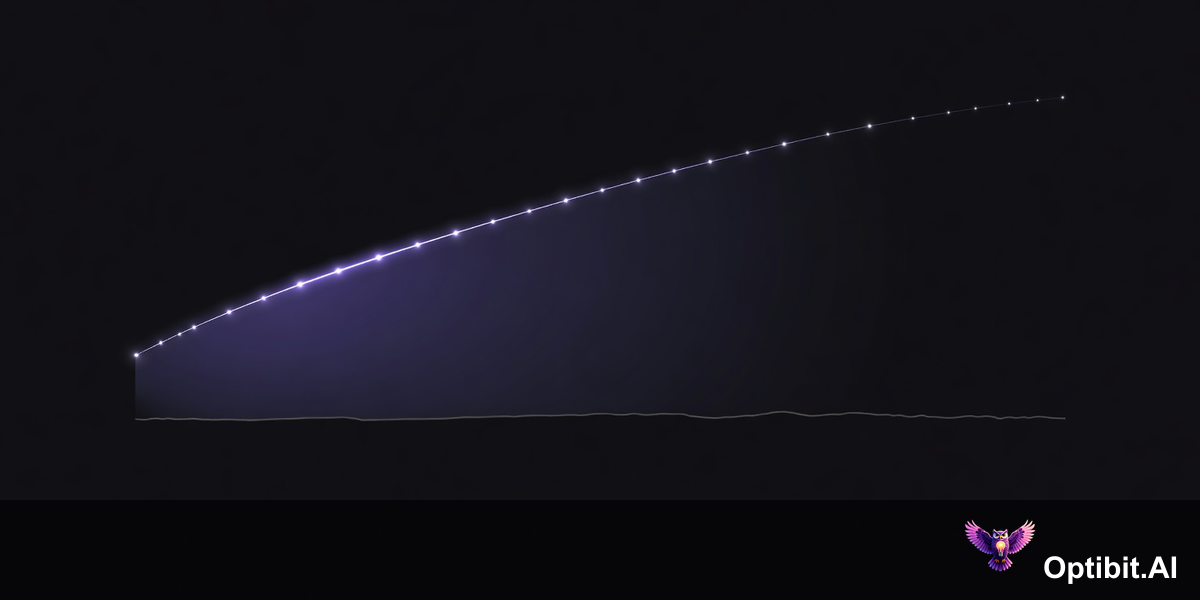
That world is gone. Engineering teams using AI tools are shipping two, three, four times faster than they were two years ago. At the high end, teams are releasing multiple times per week. Product surface area is growing at a rate that no human GTM process was designed to absorb. And while engineering velocity has bent upward sharply, the systems that translate what ships into what sales reps know have not moved at all.
The result: your sales team is pitching a product that is materially behind the one your engineers are building. That gap is showing up in your win rates, your average contract values, and the deals where you know you should have won and didn't.
Contents
The Knowledge Gap That Opens With Every Sprint
The gap between what engineering ships and what sales knows is not new. It has always existed. What is new is the rate at which it grows.
In a traditional two-week sprint cycle, a team might ship one or two meaningful features plus a collection of bug fixes. The GTM catch-up effort for that cadence, a product update email, a Slack message, an updated deck slide, was already slow. But the cadence was slow enough that reps could roughly keep pace with reality even when communication was late.
At 3x engineering velocity, the same team is shipping three to six meaningful features per sprint. By the time the GTM team produces communication for sprint N, sprint N+2 has already closed. The rep is perpetually behind. They are describing a product that has already evolved past what they are saying, and they have no way to know it.
This is not a motivation problem. It is not a laziness problem. Your sales reps are working hard. They are pitching the product they know. The problem is that what they know is three to six weeks out of date, and in a fast-moving product, three to six weeks is a lot of ground.
Six weeks of product knowledge lag sounds manageable in the abstract. Put it in context: if your engineers shipped 14 meaningful updates in the last six weeks, your sales rep knows about zero of them. Every conversation they have is built on a product snapshot that predates those 14 changes.
Three Failure Modes in Every Sales Conversation
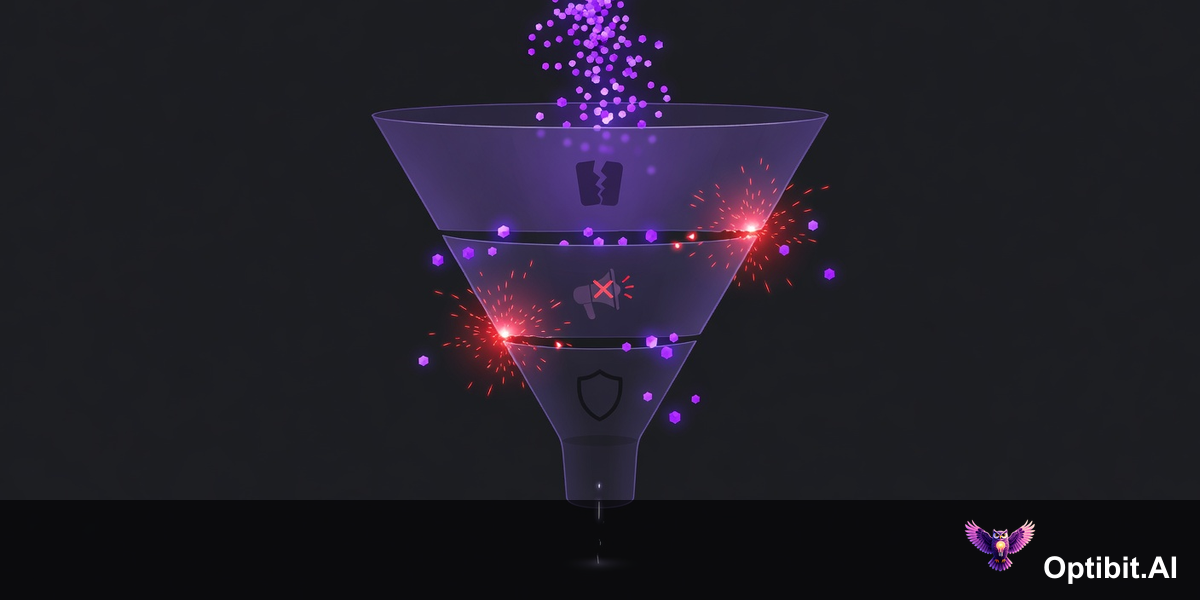
The knowledge gap doesn't stay abstract. It shows up in specific, predictable ways during sales conversations. There are three failure modes, and most teams with a fast-moving engineering org are hitting all three simultaneously.
What makes this particularly damaging is that all three failure modes are invisible from the outside. The rep doesn't know they failed. The manager doesn't know why the deal slipped. The post-mortem attributes the loss to "pricing" or "product gaps" or "executive access" because no one diagnosed the actual cause: the rep was working from the wrong version of the product.
The Competitive Asymmetry Problem
Here is where this gets dangerous at a market level. Not every company has a fast-moving engineering org. Not every competitor has adopted AI tools at the same rate. But the ones that have are shipping faster, and if they have also solved the GTM catch-up problem, their reps know more about their product than your reps know about yours.
Think about what that looks like in a competitive evaluation. A prospect is running two vendors through a structured process. Vendor A (your competitor) has implemented some form of continuous sales enablement: updated battle cards, release-by-release capability briefs, current demo environments. Their rep walks in knowing exactly what shipped last month and why it matters for this specific buyer. Vendor B (you) has a rep who is sharp, hardworking, and pitching a product snapshot from six weeks ago.
The prospect doesn't know either rep is working from incomplete information. They only know which one answered their questions better, which one seemed to understand the problem more thoroughly, and which one gave them confidence that the product is actively evolving in the direction they need. That rep wins. It may have nothing to do with the underlying product.
Product-market fit does not win deals. Conversations win deals. And conversations are only as strong as the knowledge the rep carries into them.
What the Numbers Look Like
Win rate is where the gap shows up most directly. Sales teams with current, accurate product knowledge close at meaningfully higher rates than teams operating on stale information. The exact delta varies by deal size and complexity, but the direction is consistent: knowledge currency correlates with win rate.
That last number deserves to sit for a moment. When you run structured win/loss analysis and dig into the "we lost because of product gaps" category, roughly four in ten of those deals involved a feature that was already in the product. The rep either didn't know it existed, couldn't articulate it clearly, or both. The product didn't lose that deal. The knowledge transfer did.
Average contract value is the second number to watch. Reps who only know the product from 18 months ago sell the product from 18 months ago. New capabilities that would justify higher ACV, expanded seat counts, or additional modules never enter the conversation. The rep closes the deal they can support, not the deal the current product deserves.
Why More Sales Training Won't Fix This
The standard response to a sales knowledge problem is more training. Quarterly sales kickoffs. Product certification programs. Weekly product updates in a Slack channel. These interventions have real value, but they do not fix the structural problem.
Training is a batch process. It delivers knowledge in scheduled chunks. But engineering at 3x velocity is a continuous process. The gap between training sessions is wide enough to swallow months of product evolution. A rep who completes your Q1 product certification is already behind by the time Q2 starts, and the gap only grows from there.
The Slack channel problem is similar. Someone has to write the updates. Someone has to write them in a format that helps reps understand what changed, why it matters, and how to explain it to a prospect. At 3x engineering velocity, that person is creating content faster than any human content team was designed to produce. Most companies either fall behind immediately or write updates at such a surface level that reps cannot use them in conversation.
| Approach | What It Delivers | What It Misses |
|---|---|---|
| Quarterly SKO product session | Deep knowledge of features shipped before the event | Everything that ships in the next 90 days |
| Weekly product Slack update | Awareness that things shipped | Context, competitive positioning, and how to use it in a demo |
| Release notes in the changelog | Technical record of what changed | Audience-specific framing that translates to a sales conversation |
| Battle cards (updated quarterly) | Competitive positioning at point-in-time | Any competitive shift or product update that happens between updates |
| Continuous GTM content pipeline | Per-release sales briefs, updated battle cards, demo scripts that match current product | Requires automation to sustain at engineering velocity |
The problem is not effort. Every company with a sales knowledge problem has people who are trying to fix it. The problem is that fixing it at engineering velocity requires a volume of content production that manual processes cannot sustain.
Closing the Loop Between Shipping and Selling
The fix is structural. You need a pipeline that converts what ships directly into what reps know, on the same cadence that engineering ships it. That means every meaningful release needs to produce several things automatically: a rep-facing summary that explains what changed and why it matters to buyers, updated competitive positioning if the feature affects head-to-head comparisons, a revised talk track for the feature, and updated demo instructions.
None of those artifacts are complicated to produce from a technical writing standpoint. But producing four to six of them per sprint, per release, continuously, across every product surface area, is not a job a human team can sustain without tooling. The math simply does not work.
The reason companies don't do this is capacity. The content team has three people. Engineering is shipping every week. There is no world where three humans produce four artifacts per release, per release, week after week, while also supporting every other marketing function.
This is the problem OptibitAI was built to solve. The platform connects directly to your code repositories and issue trackers, reads what ships, understands the context behind the change, and generates sales-ready content on the engineering release cadence, not the marketing team's capacity. The rep gets a brief. The battle card updates. The demo script reflects what just shipped. All of it happens the day the code goes out, not six weeks later.
The Real Cost of Doing Nothing
The GTM knowledge gap feels like an operational problem, so it gets treated like one: with internal process improvements, aspirational Slack channels, and SKO sessions that arrive too late. But at 3x engineering velocity, it is a revenue problem. It is already in your win rate. It is already in your ACV. It is already in your churn data, in the accounts who left because they didn't know the product had evolved past the version they gave up on.
The companies that close this gap in the next 12 months will not just win more deals. They will build a reputation for GTM execution that compounds: better analyst positioning, stronger case studies, higher NPS from customers who actually know what they purchased. The companies that don't will keep attributing losses to product gaps that aren't really product gaps.
Engineering isn't the bottleneck anymore. Sales knowledge is. And unlike engineering velocity, it's a solvable problem once you stop trying to solve it with more people and start solving it with the right system.
See how OptibitAI connects your engineering release cadence to your sales team's product knowledge, automatically, on the day each release ships.