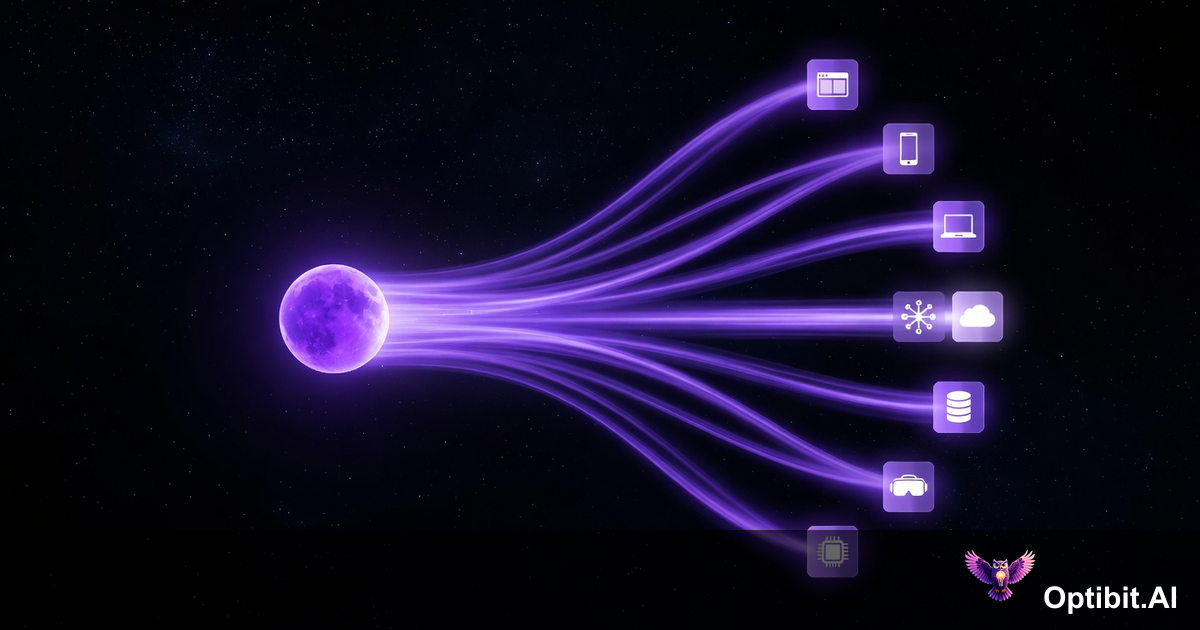
One Release. Eight Artifacts. Zero Lag.
Your engineer merges the PR on a Tuesday afternoon. The feature is live. Now what?
In most companies, what happens next is a slow, fragmented scramble. Someone on Product pings Marketing. Marketing adds it to the backlog. A PMM starts drafting release notes on Thursday. The sales team doesn't hear about it until the next standup. Support discovers the feature when a customer asks about it. The LinkedIn post goes out two weeks later, already behind the next release.
By the time the market knows what you built, you've shipped three more things and the content team is even further underwater.
This is the default state for most software companies. It doesn't have to be. OptibitAI processes a release and generates eight complete, publication-ready GTM artifacts in parallel, in minutes. Here is exactly what that looks like.
Contents
The Old Way: What a Release Actually Costs GTM
Count the handoffs in a typical release cycle. Engineering finishes the work and writes a PR description. A PMM reads it, maybe, if the ticket was linked. The PMM drafts release notes. Someone reviews them. A marketing writer turns them into a customer email. A different writer drafts the LinkedIn post. A sales enablement person updates the battle card, if they know the feature exists. Support updates the KB article, if anyone remembers to file a ticket. The API changelog gets written by whoever has time.
Each artifact is a separate project. Each one requires someone to start from scratch, re-read the context, re-understand the audience, and re-write for a different format. Collectively, covering a single release across all these channels takes the average team 20 to 30 hours of human effort, spread across multiple people and multiple weeks.
At two releases per month, that's 40 to 60 hours of GTM writing time, minimum. At weekly shipping cadences, the math breaks entirely. Content teams don't scale linearly with release velocity. They hit a wall, start triaging, and begin deciding which releases are "important enough" to cover. That judgment call is where revenue leaks.
The Trigger: One Merge, Everything Starts
OptibitAI connects directly to your GitHub or Bitbucket repository. When you point it at a release, it reads the commit history, pull request descriptions, and diff context. It understands what changed, which components were affected, and what the functional impact is for different audiences.
That understanding becomes the foundation for every artifact. Engineering wrote code. OptibitAI reads what that code does and generates content tailored to each downstream audience simultaneously.
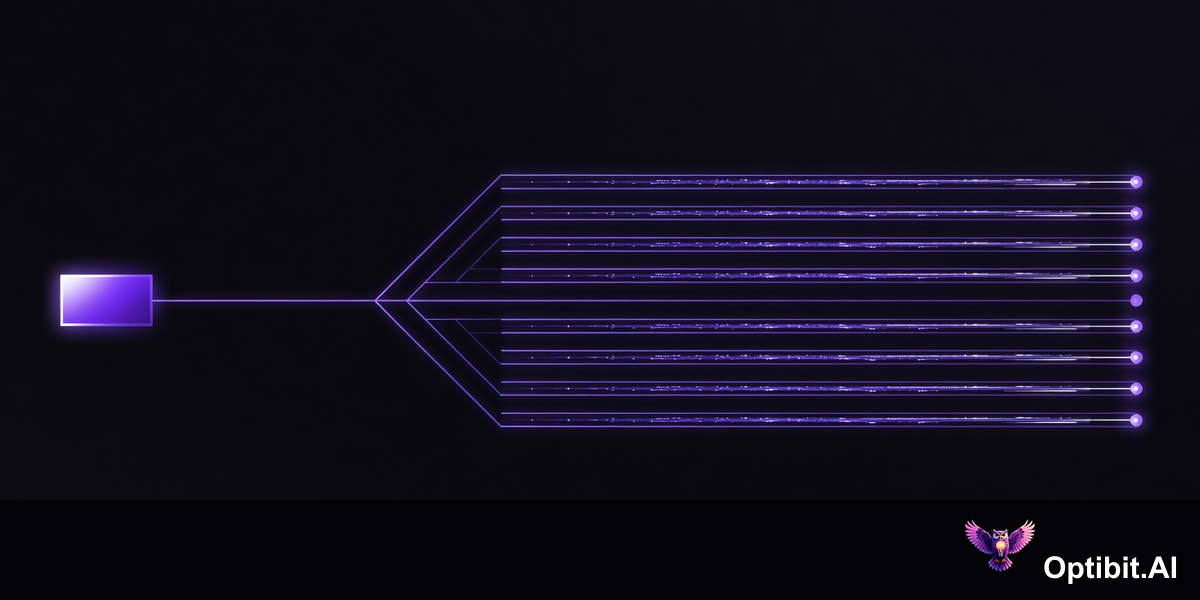
The Eight Artifacts, Explained
Here is what gets generated from a single release, in parallel, with audience-specific tone and context for each.
Each artifact is not a reskin of the same text. OptibitAI applies role-based personalization to every output. The engineering changelog is technical, precise, and includes component-level detail. The customer announcement is clear, benefit-focused, and written in plain language. The LinkedIn post is punchy and framed for engagement. The battle card is structured for speed: what changed, what it means for competitive positioning, how to handle objections around it.
The same release. Eight completely different documents. All generated simultaneously. All grounded in the same source of truth.
If the output needs refinement, you chat with Opti directly. Ask it to sharpen the hook on the LinkedIn post, adjust the tone of the customer email, or expand a specific section of the KB article. No full regeneration required. Iterate in natural language, the same way you would with a human writer, in a fraction of the time.
Why the Output Sounds Like You
The most common objection to AI-generated content is that it sounds generic. That objection is valid for tools that generate content from a prompt and nothing else. OptibitAI is different because of the Corpus.
The Corpus is a living knowledge base that belongs to your organization. You populate it with the files that define who you are and how you communicate. Once it exists, Selective Context Injection (SCI) automatically pulls the most relevant excerpts from the Corpus at generation time. The AI doesn't just know what the release does. It knows how your company talks about features, who your customers are, what objections your sales team faces, and what your brand voice sounds like.
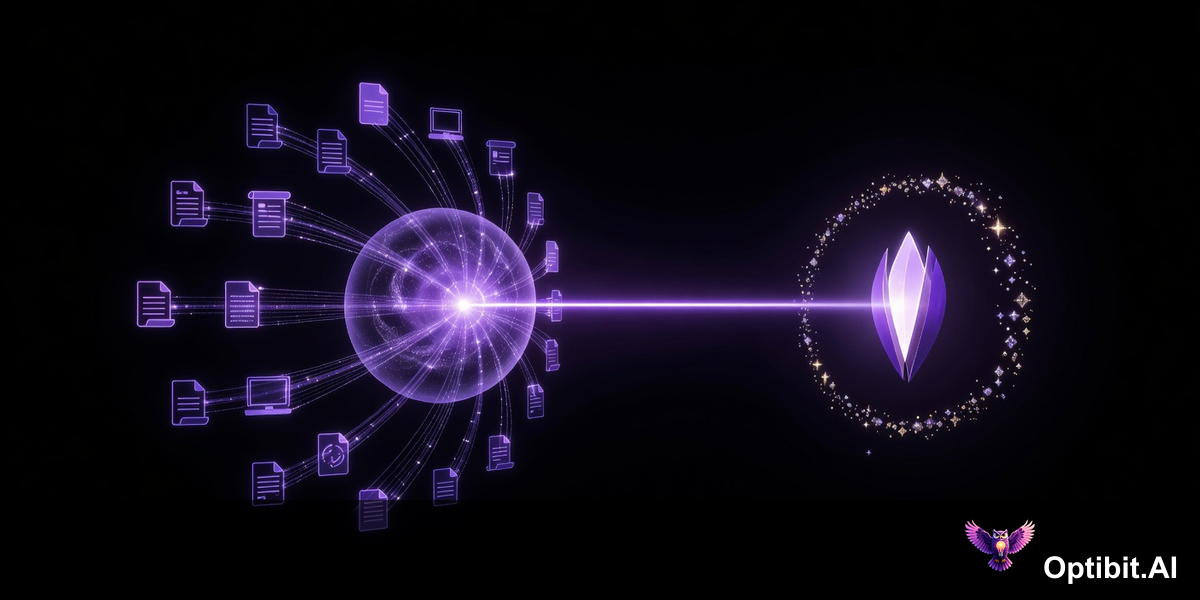
What goes into the Corpus:
The Corpus accepts PDFs, Word docs, spreadsheets, presentations, plain text, Markdown, ZIP archives, code files, and direct integration pulls from GitHub, Bitbucket, SharePoint, Google Drive, Confluence, Jira, Asana, AWS S3, OneDrive, and Salesforce. If the information exists somewhere in your organization, it can live in the Corpus and inform every artifact OptibitAI generates.
This is the difference between an AI that writes plausible content and an AI that writes accurate, context-specific content. Generic AI tools hallucinate your voice. OptibitAI is grounded in it.
Before vs. After: The Math
A mid-sized SaaS company ships two meaningful releases per month. Each release, when fully covered, produces eight GTM artifacts. Here is what the effort looks like under each model.
Before OptibitAI
- External release notes: 3 hrs (PMM)
- Engineering changelog: 2 hrs (Engineering)
- Customer email: 2.5 hrs (Marketing)
- LinkedIn post: 1 hr (Marketing)
- Battle card update: 3 hrs (PMM + Sales)
- KB article: 2 hrs (Support)
- API changelog: 2 hrs (Engineering)
- Sales talking points: 2.5 hrs (PMM)
- 18 hrs per release × 2/month = 36 hrs
- Lag to publication: 14–21 days
With OptibitAI
- All eight artifacts: parallel generation
- Corpus pre-loaded with brand context
- Repo connected to GitHub or Bitbucket
- Real-time progress tracking per artifact
- Review and approval in shared workspace
- Iterate with Opti chat, no regeneration
- ~2 hrs human review per release × 2/month = 4 hrs
- Lag to publication: same day
Those numbers compound. At a weekly shipping cadence, the manual model requires 72 or more hours of GTM writing per month. That's nearly two full-time employees doing nothing but translating engineering output into content, every single month, forever. OptibitAI reduces that to review time. The humans who used to write from scratch now spend their time approving, refining, and publishing.
The built-in ROI calculator makes this concrete for your specific numbers. Enter your release frequency, team size, and average hourly cost. OptibitAI shows you exactly what your current content process costs and what it costs with automation. Early users consistently land above 80% savings. Some report seeing "127 hours saved" on the admin dashboard inside the first quarter.
Who This Is For
OptibitAI is built for teams where engineering velocity has already outpaced GTM capacity, or where that gap is clearly coming.
If you are a VP of Marketing watching your team fall further behind with every sprint, this is the system that closes the gap without adding headcount. If you are a VP of Product trying to give engineering's work the market coverage it deserves, this is how you get there. If you are a CTO who has watched release notes go out three weeks late, or not at all, this is the fix.
It works for teams of any size: from a three-person startup where the founder is writing everything, to an enterprise shipping dozens of microservices per week. For security-sensitive organizations, OptibitAI deploys fully on-premises via Docker Compose, with AES-256-GCM encryption and GDPR/CCPA compliance built in. Government contractors and air-gapped environments are supported. Your IP stays in your infrastructure.
The platform supports every major LLM: Claude, ChatGPT, Gemini, Grok, Microsoft Copilot, and open-source models via Ollama. You choose the model. You control the context. You own the output.
The integrations go where your team already works: GitHub, Bitbucket, Jira, Confluence, SharePoint, Google Drive, Asana, Salesforce, AWS S3, and OneDrive. The Corpus connects to your existing knowledge. No rekeying, no copy-paste, no context lost in translation.
Your next release is already in progress. The code will be merged before the GTM team knows it happened. OptibitAI is how you change that equation, permanently.
See what it looks like for your releases at optibit.ai.