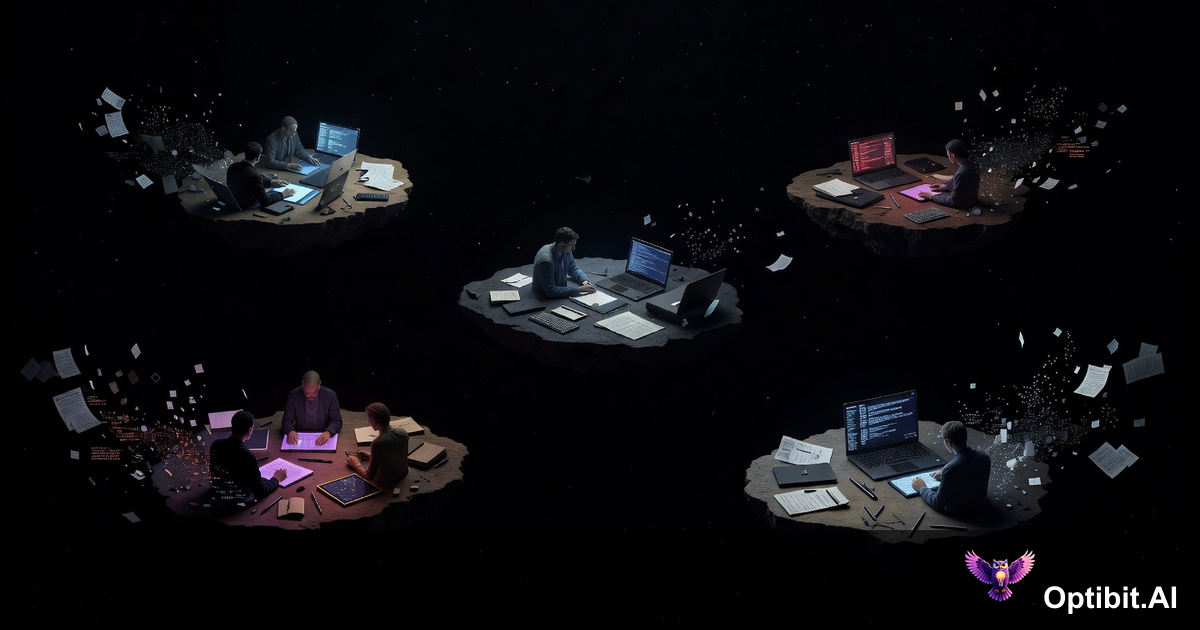
Five Teams. Five Tools. Zero Shared Context.
Here is the GTM stack at most software companies. Product manages roadmaps and specs in Notion. Engineering works in GitHub. Marketing drafts everything in Google Docs. Sales builds and maintains decks in PowerPoint. Support runs its knowledge base in Zendesk. Five teams, five tools, and between every pair of them: a gap where context falls out.
Nobody planned it this way. Each tool made sense for the team that adopted it. Notion is flexible for product thinking. GitHub is native to engineering. Google Docs is collaborative for marketing. PowerPoint is familiar for sales. Zendesk handles tickets. The problem isn't any individual tool. The problem is that none of them talk to each other, and the content that needs to flow between them has to be manually carried across every gap, every time, by a human being who has to re-learn the context on each side before they can translate it.
Every frustration your GTM organization has with content, from stale battle cards to outdated chatbot answers to release notes no one reads to features the market never heard about, is a symptom of this structural problem. The tools are fine. The architecture is broken.
Contents
The Five Silos, Mapped
Each team has built a functional workspace optimized for their own work. The dysfunction is not internal to any team. It emerges at the boundaries between them.
Look at what each team actually needs from the others. Marketing needs to know what Engineering shipped and what Product intended. Sales needs to know what Marketing has positioned and what Engineering actually built. Support needs to know what the current product does, which requires knowing what Engineering shipped and how Marketing described it. Product needs to know what Support is hearing from customers to feed back into the roadmap.
Every one of those information flows crosses a tool boundary. None of them happen automatically. All of them require a human to read from one system, understand what they read, translate it for a different audience, and write it into a different system. That human is doing that work instead of something else. And they are doing it imperfectly, because translation always loses something.
What Happens at Every Handoff
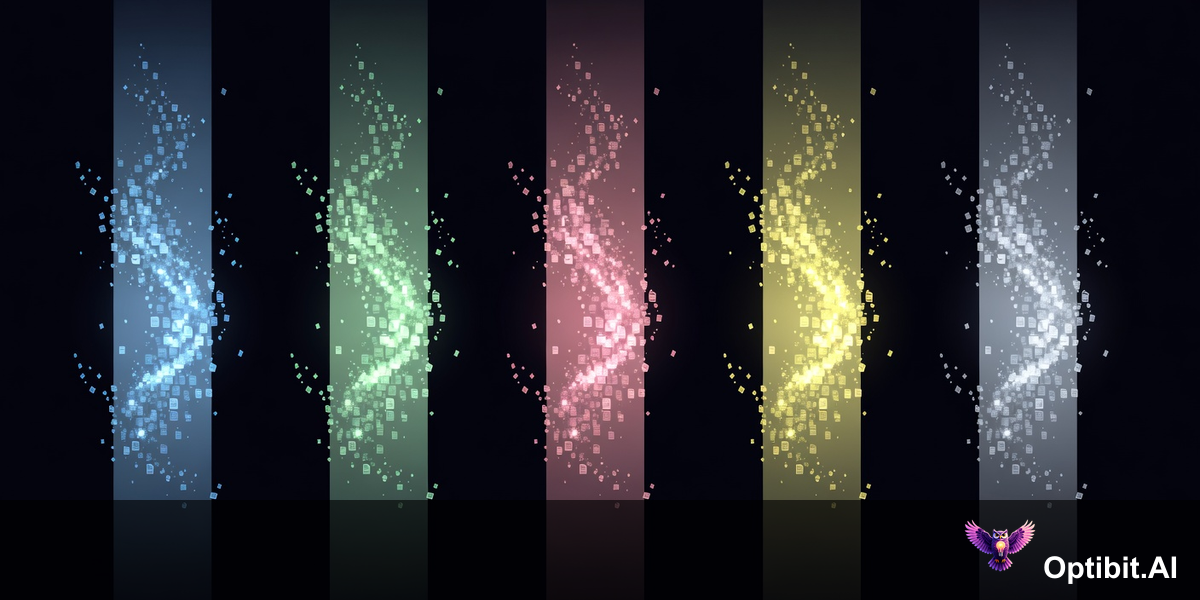
Trace a single feature from code to customer and count the handoffs. Each one has a cost.
That is five handoffs for one feature. Each one costs hours of human time, degrades the accuracy of the information being transferred, and introduces delay between the moment the product improved and the moment the improvement is usable by the people who need to communicate it. At two releases per month with eight artifacts per release, the average GTM organization runs over 190 of these handoffs per year. The friction compounds with every one.
The Symptoms You Are Already Feeling
The tool sprawl problem doesn't announce itself. It shows up as a collection of smaller, seemingly unrelated frustrations. Recognizing them as symptoms of the same root cause is the first step toward fixing the actual problem rather than each symptom individually.
Why Point Solutions Don't Fix It
The instinct when a silo creates friction is to add a bridge. Integrate GitHub with Jira so tickets track to commits. Use a Slack bot to ping Marketing when a PR merges. Build a Notion template that PMMs fill in from the release notes. Hire a technical writer who sits between Engineering and Marketing. Each of these interventions reduces friction at a specific point. None of them solve the underlying problem.
The underlying problem is that there is no shared representation of what your product is, what it does, and how it should be described for different audiences. Each tool contains a partial, siloed view. The integrations between them move data, but they don't create shared understanding. A Slack notification that a PR merged tells Marketing that something happened. It doesn't tell them what it means for customers, how to describe it competitively, or which artifact types need to be updated as a result.
Adding more integrations between siloed tools produces a more complex web of siloed tools. The information still lives in five separate places. The handoffs still exist. The context still degrades at each one. The tooling gets harder to maintain and the failure modes get harder to diagnose.
More ominously: as engineering velocity accelerates, point solutions fall further behind. A Slack notification system that handled two releases per month becomes noise at four releases per month and breaks entirely at weekly shipping. The manual processes built to compensate for tool sprawl do not scale with release cadence. They get more expensive, more error-prone, and more bottlenecked with every sprint.
The Missing Layer
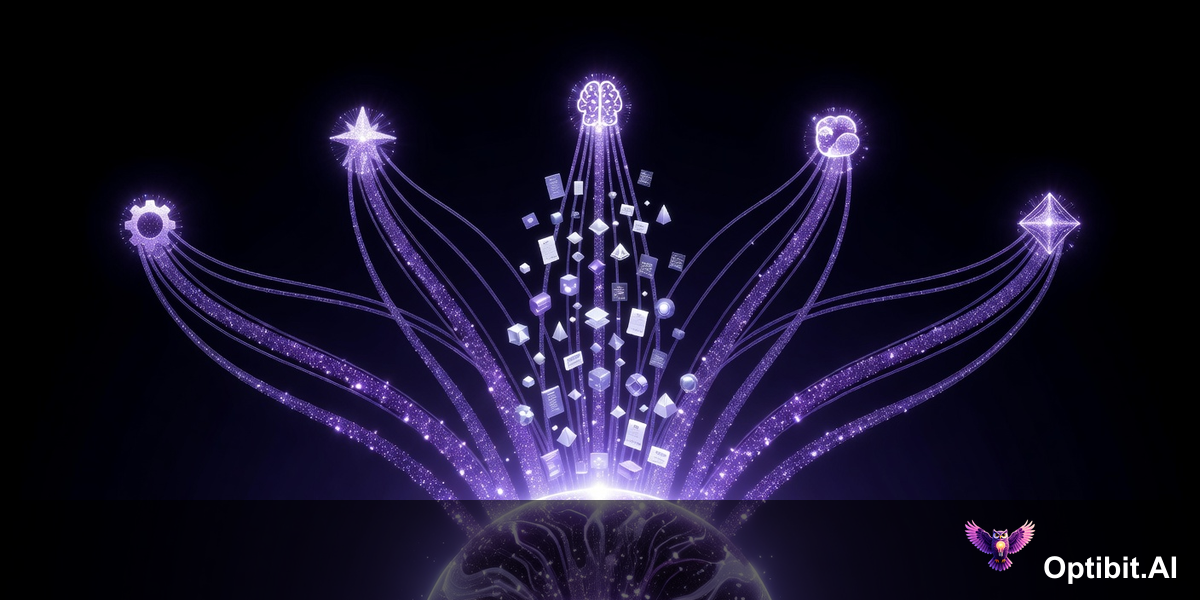
What the GTM stack is missing is not another tool for one of the five teams. It is a layer that sits across all of them: a shared content engine that reads from the sources where knowledge lives, understands what each team needs, and produces the right artifact for the right audience without requiring a human to carry context manually between systems.
That layer needs to do several things that no single existing tool does:
- Read from engineering systems natively. GitHub and Bitbucket commits, PRs, and diffs are the primary source of truth for what changed. The content engine needs to understand them directly, not wait for a human translation.
- Maintain organizational context. Brand voice, customer personas, competitive positioning, prior release history, sales objection libraries. The engine needs to know not just what changed but how your company describes and positions what it builds.
- Generate for multiple audiences simultaneously. A release doesn't need one artifact. It needs eight. Each one tailored to a different audience with different vocabulary, different concerns, and different format requirements.
- Connect to where each team works. The output can't live in a sixth new tool. It needs to flow into the systems each team already uses: Zendesk for support, Highspot for sales, Google Docs for marketing, Confluence for product.
- Keep the knowledge base current. The shared context layer is only useful if it reflects the current state of the product. It needs to update as the product updates, not as a quarterly manual refresh.
This is what OptibitAI is built to be: the shared content engine that sits across the GTM stack, connects to the systems each team already uses, and eliminates the manual handoffs between them. Not a replacement for any of the five tools. The layer that makes all five work together.
What Changes When the Stack Is Connected
The operational difference is not subtle. It is the difference between a process that requires five people to carry context across five boundaries and a process where the context is shared by default.
The larger shift is organizational. When content doesn't require manual handoffs, the people who used to execute those handoffs can focus on work that requires judgment. The PMM who spent 18 hours per release writing from scratch now spends two hours reviewing and approving output they didn't have to produce. The engineer who answered PMM questions about the PR description now has that time back. The sales enablement manager who was perpetually behind on updating materials now has a process that keeps up automatically.
The five silos don't disappear. Each team still works in the tools they know. But the gap between them, the space where context used to fall out of the system, is closed. Information generated in GitHub flows to every team that needs it. Knowledge uploaded from a competitive teardown in Google Drive improves every battle card generated from now on. A customer interview transcript added to the shared knowledge base makes every future customer-facing artifact more accurate.
This is the compound effect of shared context. In a siloed architecture, every piece of knowledge is used once, by the team that created it, and then sits inaccessible to everyone else. In a connected architecture, every piece of knowledge improves every artifact that touches it, indefinitely. The stack gets smarter with every release. The gap between what you know and what your content reflects closes instead of widening.
The problem was never that your teams weren't working hard enough. It was that the architecture made it structurally impossible for the right information to reach the right people at the right time. Fix the architecture and the effort your teams were already putting in starts producing the results it deserved.
See how OptibitAI connects your GTM stack and closes the context gap for good.