Your AI Support Agent Is Confidently Wrong. Here's Why.
You deployed an AI support agent. It handles tier-one tickets, resolves common questions, deflects volume from your human team. The deflection rate looks good in the dashboard. The ticket counts are down. Leadership is pleased.
Your customers are getting wrong answers. Delivered with complete confidence. At the speed and scale that only AI can achieve.
The agent is not hallucinating. That is the important distinction. It is accurately recalling information that was correct when your knowledge base was last updated. It is telling customers how a feature works based on documentation that described it accurately nine months ago. The feature changed. The documentation did not. The agent learned from the documentation.
Every customer who asks about that feature gets a fluent, well-structured, confidently wrong answer. The agent never hedges. It does not say it is unsure. It has no mechanism for knowing that the information it retrieved is outdated. It just answers.
Contents
It Is Not Hallucination. It Is Worse.
The AI industry spent years warning about hallucination: models generating plausible but fabricated information. Teams built safeguards, added retrieval layers, grounded responses in source documents. For many use cases, hallucination is now a manageable problem.
The problem that replaced it is harder to detect and arguably more damaging. It is not fabrication. It is accurate recall of outdated facts.
When a model hallucinates, there is often a signal. The answer feels off. It lacks specificity. It does not match what the user knows about the product. A human reviewer can spot it. A well-constructed evaluation can catch it. The wrongness has a texture that is identifiable.
When a model accurately recalls outdated documentation, the answer feels right. It is specific. It uses the correct terminology. It matches the mental model of anyone who learned the product six months ago. It is confidently, precisely, specifically wrong in a way that is almost impossible to detect without knowing the current state of the product. The wrongness is indistinguishable from accuracy unless you already know the correct answer.
How AI Support Agents Go Stale
AI support agents are grounded in a knowledge base: a collection of documentation, help articles, release notes, and FAQs that the agent retrieves from when answering questions. The quality of the agent's answers is directly determined by the quality and currency of that knowledge base.
Building the initial knowledge base is a project. Teams spend weeks populating it, organizing it, testing the agent against it. At launch, the knowledge base is current. The agent performs well. Ticket deflection rates are high. The team moves on to other priorities.
The product keeps shipping. Features change. Workflows are updated. Navigation moves. Pricing tiers are restructured. Integrations are added. Old limitations are removed. The knowledge base stays where it was at launch, plus whatever articles the support team managed to add when they had bandwidth, which is inconsistently.
The gap between the agent's knowledge and the product's current state widens with every release. After six months of biweekly shipping, the agent has a meaningful accuracy problem across any area of the product that has seen active development. After a year, the problem is significant. After eighteen months, the agent is a liability in any product area that evolved substantially since launch.
The Confidence Problem
A human support agent who is uncertain will say so. They will hedge, flag the question for escalation, or acknowledge that something may have changed. Uncertainty is expressed and acted on.
An AI agent has no mechanism for expressing uncertainty about information it retrieved from its own knowledge base. From the model's perspective, the retrieved document is authoritative. It does not know the document is nine months old. It does not know the product changed. It has no signal that the information it is presenting may be stale. It answers with the same confidence whether the underlying documentation is current or outdated.
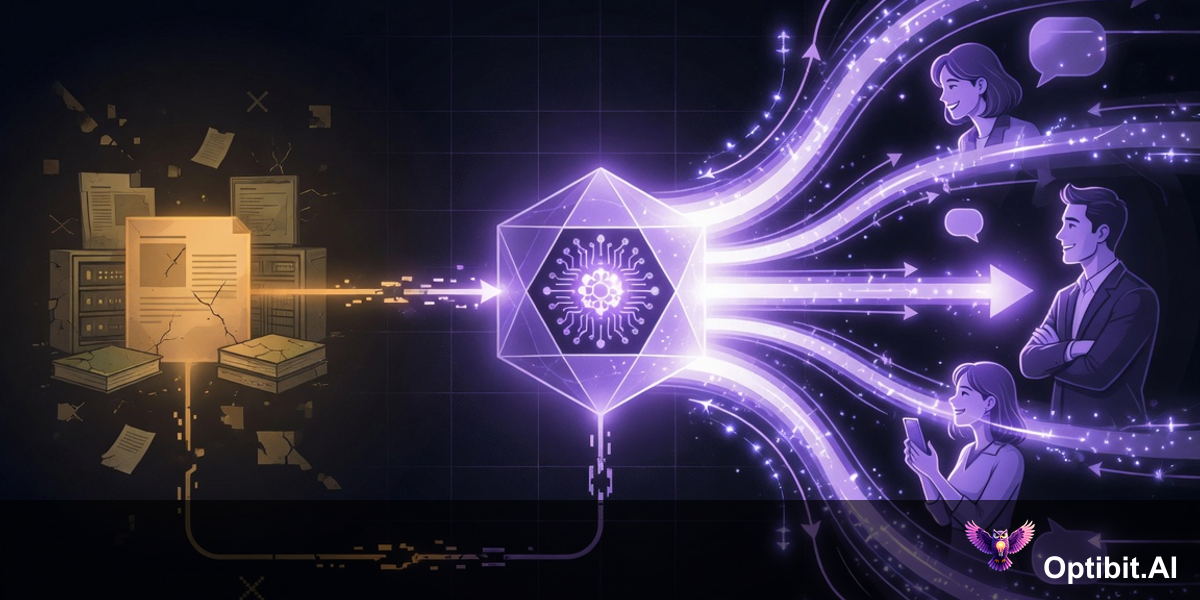
This is the fundamental problem with deploying AI over a static knowledge base in a fast-moving product. The model's confidence is calibrated to retrieval quality, not information currency. A well-written help article from eight months ago retrieves cleanly and generates a confident, fluent response. The confidence is real. The accuracy is not.
Customers cannot distinguish a confidently correct AI answer from a confidently wrong one. They act on both. The customer who gets the wrong answer tries what the agent described. It does not work. They conclude the product is broken, or that the agent is useless, or both. They escalate. The escalation is more expensive than the original ticket would have been. The trust damage is real and not easily recovered.
What Wrong Answers at Scale Actually Cost
The cost calculation for AI support is almost always framed around deflection: how many tickets did the agent handle without human involvement. Deflection rate is the metric everyone reports.
It is the wrong metric. Deflection measures volume handled. It does not measure accuracy. An agent that deflects 60% of tickets and answers 30% of those incorrectly is not delivering 60% savings. It is delivering 42% savings and actively damaging customer trust in the other 18%.
The Expensive Escalation
A customer gets a wrong answer, tries it, fails, and escalates to a human agent. The human agent now has to undo the incorrect expectation the AI set before solving the actual problem. The ticket takes longer than it would have without AI involvement. The deflection that was claimed as a win became a net cost.
The Silent Churn Signal
A customer gets a wrong answer about a core workflow. They try to follow it. It fails. They do not escalate. They conclude the product does not work the way they need and begin evaluating alternatives. This churn signal never appears in your support data because no ticket was filed. The AI deflected it.
The Trust Collapse
A customer gets two or three wrong answers from the AI agent over a period of weeks. They stop trusting it entirely and route all questions to human agents, negating the deflection benefit. Worse, they mention in their next NPS response that the AI support is unreliable. The perception damage spreads.
The Compounded Misguidance
A wrong answer about a setup step causes the customer to configure something incorrectly. Every subsequent answer the agent gives is technically correct but practically useless because the configuration is wrong. The customer spends hours following accurate guidance that does not solve their problem, because the foundation was laid wrong by outdated information.
Your Product Is Moving Faster Than Your Knowledge Base
The knowledge base problem existed before AI-accelerated development. It is categorically worse now.
Engineering teams using AI coding tools ship two to five times more features per sprint than they did two years ago. Every feature shipped is a potential knowledge base update. The surface area of product behavior that customers ask support questions about grows with every release. The number of ways the AI agent can be wrong grows proportionally.
The knowledge base maintenance capacity has not grown at the same rate. Support teams are not larger. Technical writers are not more numerous. The ratio of product changes to knowledge base updates has deteriorated sharply at every company that adopted AI-assisted development without rethinking their documentation supply chain.
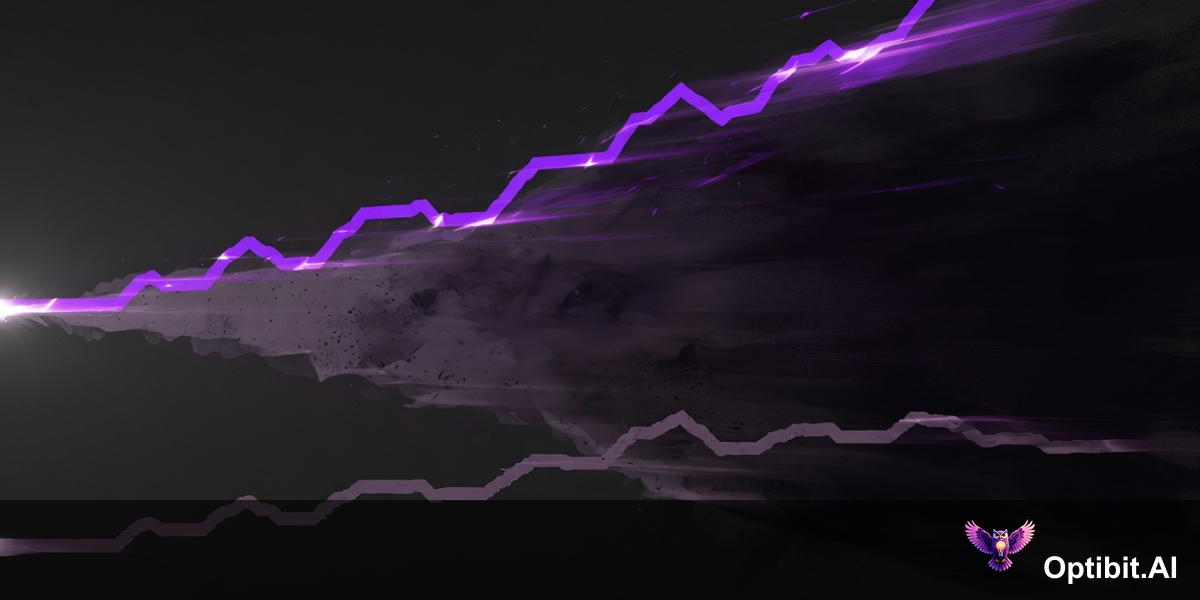
The result is a support agent whose accuracy degrades in direct proportion to your engineering team's productivity. The faster engineering ships, the faster the knowledge base falls behind, the more confident wrong answers the agent delivers. Success in product development creates a support quality problem that most teams are not measuring.
The Context Layer Your Agent Is Missing
The fix is not a better model. Every team that tried upgrading to a more capable model discovered the same thing: a smarter model that retrieves from a stale knowledge base gives smarter-sounding wrong answers. The model is not the variable. The context is the variable.
What the agent needs is a knowledge base that updates on the same cadence as the product. Every release that changes product behavior should produce a corresponding knowledge base update before the change reaches customers. That update should be generated from the engineering output: the actual diff, the PR description, the Jira ticket that specified the change. The person who built the feature already described what it does. That description needs a path to the knowledge base.
This is not a documentation problem in the traditional sense. It is a content supply chain problem. The information exists at the source. The gap is the pipeline from engineering output to knowledge base article. At most companies, that pipeline is a human relay with too many steps and too little bandwidth. Updates arrive weeks after changes ship, if they arrive at all.
Closing that gap requires reading engineering output automatically, identifying what changed in customer-facing product behavior, and producing a knowledge base update draft that can be reviewed and published without requiring a technical writer to start from scratch. The writer reviews and approves. They do not author. The throughput required to keep pace with engineering velocity becomes achievable.
Keeping Your Agent Current
The companies with the best AI support accuracy share one practice: they treat knowledge base currency as a release criterion. A feature change is not shipped until the corresponding knowledge base update is staged and ready to publish. The support team is in the release loop, not downstream from it.
This requires a mechanism for catching product changes before they reach customers and translating them into knowledge base language. Not release notes. Not technical documentation. Plain-language descriptions of how the feature works, written at the altitude a support agent needs to answer customer questions accurately.
The AI agent is only as accurate as the context it retrieves from. That context needs to be maintained with the same rigor as the product itself. A support agent running on a six-month-old knowledge base is not a support tool. It is a confidence-generating machine for outdated information. The deflection numbers look fine. The customer experience does not.
Your product shipped something last week that changed how a workflow your customers use every day behaves. The AI agent describing that workflow is doing so based on how it worked before. Right now, someone is following the agent's instructions and wondering why nothing is working. They are about to escalate, or churn, or both.
Try Optibit.AI to keep your AI support agent's knowledge base current with every release, so the answers your agent gives reflect the product you actually ship today.