The API Docs Trust Gap: Why Developers Ghost Your Product After the First Failed Call
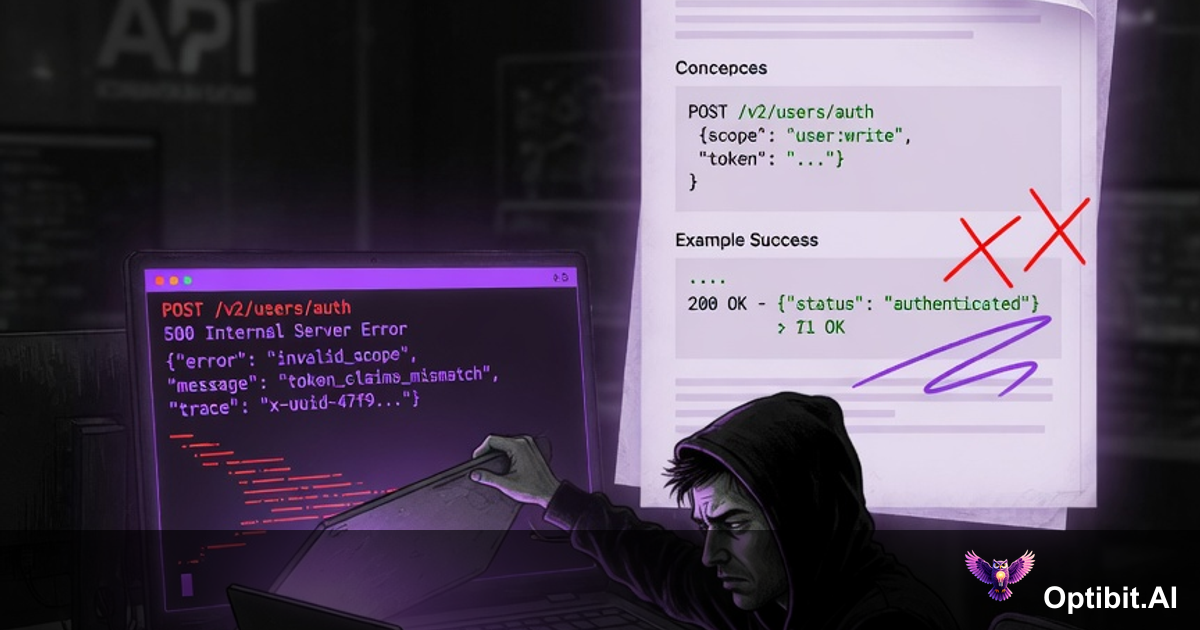
A developer lands on your API docs. They have a specific thing they want to build. They read the authentication section, copy the example, run it. Something is wrong. The response does not match what the docs said it would be. They try again with a variation. Still wrong. They check the endpoint. They check the headers. They re-read the example three times looking for the thing they missed.
They did not miss anything. The docs are wrong. The API changed and the docs were not updated.
The developer closes the tab. They do not file a bug report. They do not reach out to support. They do not give you a second chance next week. They move on to a different solution, and your product never makes it into their stack. You will never know this happened. There is no record of it. The integration that would have compounded into a significant account simply never started.
This is the API docs trust gap. It is not a developer experience problem. It is a revenue problem with a documentation root cause.
Contents
The Twenty-Minute Trust Decision
Developers evaluate APIs differently from how business buyers evaluate software. There is no demo. There is no sales cycle. There is no relationship that buys goodwill. A developer reads the docs, tries the code, and forms a judgment. That judgment is almost entirely binary: this works as described, or it does not.
The evaluation window is short. Research on developer onboarding consistently shows that the first twenty minutes determine whether a developer will invest further in an integration. In that window, they are looking for one thing: confirmation that your documentation tells the truth. Not that it is beautiful. Not that it is comprehensive. That the example in the quickstart guide produces the result the quickstart guide says it will produce.
When that confirmation comes, the developer's trust level rises sharply. They are now willing to invest more time, read deeper documentation, handle edge cases, work through complications. The initial success primes them to attribute subsequent difficulties to their own implementation rather than your product.
When the confirmation does not come, the opposite happens. The developer's trust drops to near zero and does not recover. Subsequent difficulties get attributed to the product being unreliable or the docs being untrustworthy. The investment required to keep debugging does not feel worth it when the foundation is suspect.
How API Docs Fall Behind
API documentation starts accurate. At launch, someone cared enough to write examples that work, describe the schema correctly, and document the error codes. The problem is that the documentation was written for the API as it existed at a specific point in time, and the API keeps changing.
Endpoints get added. Parameters get renamed. Response schemas gain or lose fields. Authentication flows change. Rate limits shift. Deprecated methods accumulate. Error codes are added to cover edge cases engineering discovered after launch. Each of these changes is a potential divergence between what the docs say and what the API does.
Keeping the docs current requires catching every one of these changes and updating the relevant documentation before developers encounter the discrepancy. At most companies, this catch rate is well below 100%. The mechanism for translating an API change into a documentation update is informal: a developer mentions in a PR that something changed, a technical writer is supposed to notice, the writer updates the docs if they had bandwidth that sprint.
The mechanism fails constantly. PRs do not always note documentation implications. Technical writers are rarely staffed at a ratio that allows them to review every API-touching commit. Documentation updates get scheduled for "next sprint" and then slip to the sprint after that. The release ships with a changed API and unchanged docs, and every developer who tries the integration during that window encounters the lie.
What Breaks When Docs Lie
The failure modes are specific and each has a distinct cost.
The Wrong Response Shape
The docs show a response with a user_id field. The API now returns userId. The developer's code fails silently or throws a null reference. They spend an hour debugging something that is not their fault. The hour is gone. Their opinion of your product is worse than it was before they started.
The Missing Required Parameter
A parameter that was optional at docs-writing time is now required. The developer omits it because the docs said it was optional. The API returns a cryptic 400. The error message does not explain the requirement. The developer assumes they are doing something wrong and debugs in circles before giving up.
The Deprecated Endpoint
The quickstart guide points to /v1/resource. The API added /v2/resource six months ago. /v1/ still works but is undocumented as deprecated. The developer builds on /v1/, ships to production, and discovers the sunset notice months later under time pressure.
The Changed Auth Flow
The docs describe OAuth with a specific scope string. The required scope changed in a security update. Every developer following the documented auth flow gets a 403 they cannot explain. The support queue fills with tickets from developers who did everything right and still cannot authenticate.
Each of these scenarios produces the same outcome: a developer who tried to use your product correctly, followed your documentation faithfully, and was punished for it. That is the most corrosive trust failure possible. The developer did nothing wrong. The product failed them.
The Invisible Developer Churn
The business cost of API docs lag is almost entirely invisible in standard reporting. A developer who abandons an integration does not appear in your churn data. They were never a customer. They were a prospect, and they self-selected out before they could become one.
Developer-led growth depends on a funnel that looks roughly like this: developer discovers the API, reads the docs, builds a proof of concept, ships an integration, becomes an account, expands usage, advocates internally. The docs trust gap breaks the funnel at the second step. Every developer who hits a docs lie and leaves represents the entire downstream value of that potential account, from initial integration through full expansion.
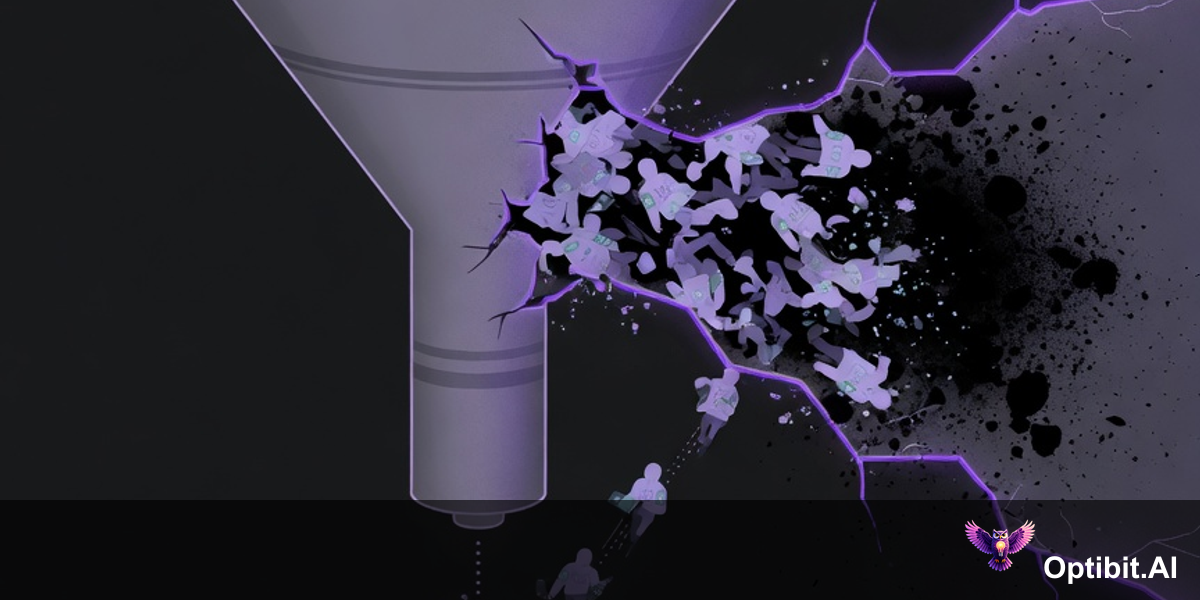
The compounding effect is significant. A developer who successfully integrates and advocates internally is worth multiples of the original integration value. Developer champions drive bottom-up adoption in ways that sales teams cannot replicate. When you lose a developer to a docs trust failure, you lose not just one integration but every integration that developer would have influenced, recommended, or built on top of yours.
Word travels fast in developer communities. A developer who had a bad experience with your docs is more likely to mention it than one who had a good experience. The negative signal spreads. Other developers in their network arrive at your docs already skeptical. The trust gap in your documentation becomes a reputation gap in your target developer community.
AI-Accelerated Development Makes the Gap Worse
The docs lag problem existed before AI-accelerated engineering. It is significantly worse now.
Engineering teams using AI coding tools ship two to five times more code per sprint than they did two years ago. More code shipped means more API surface area changed per unit of time. More API surface area changed means more documentation that needs updating per unit of time. The documentation team's capacity has not grown at the same rate. The ratio of API changes to documentation updates has deteriorated at almost every company that adopted AI-assisted development without scaling their documentation process accordingly.
There is a second effect that is less obvious. AI coding tools themselves consume your API documentation. Developers using GitHub Copilot, Cursor, or similar tools to build integrations are feeding your docs into AI context. If the docs are stale, the AI generates code based on the stale spec. The developer runs the AI-generated code, it fails, and they cannot easily tell whether the failure is an AI error or a docs error. The debugging path gets longer and the attribution problem gets worse.
An AI assistant that confidently generates code against an outdated schema is more dangerous than a developer reading the docs manually, because the confident presentation of wrong information feels authoritative. The developer trusts the AI, trusts the docs the AI learned from, runs the code, and has a worse experience than they would have had reading the docs skeptically themselves.
What Keeping Docs Current Actually Requires
The documentation accuracy problem is a content supply chain problem. The information needed to keep docs current exists in the engineering output: diffs, PR descriptions, schema change commits, API version notes in code comments. The problem is that this information lives in engineering systems, is formatted for engineers, and has no reliable automated path to documentation updates.
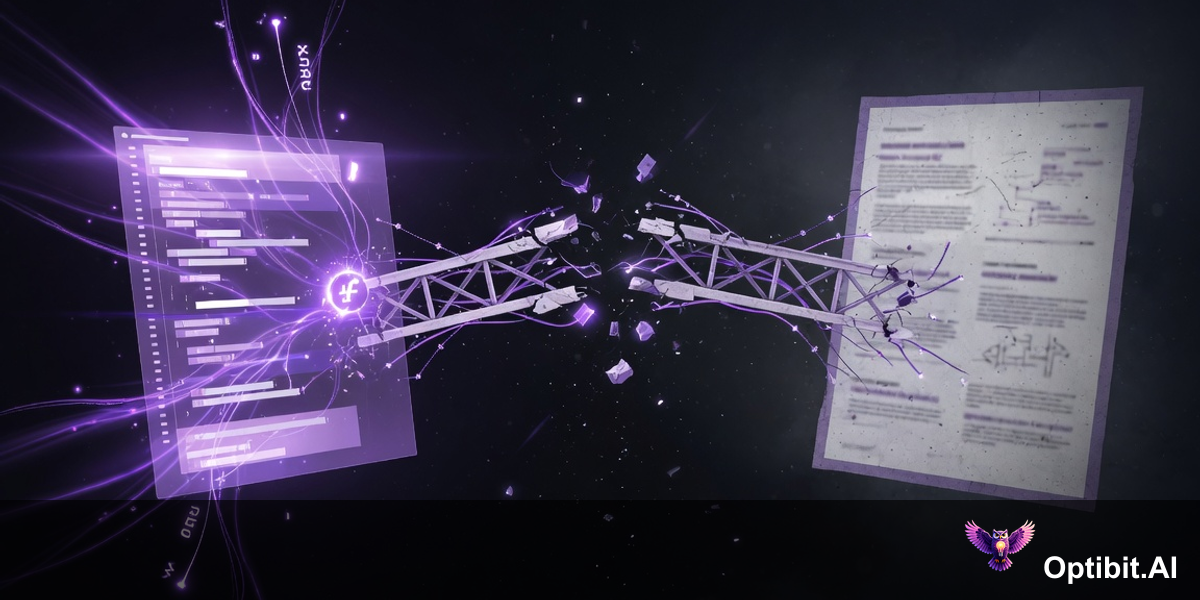
Solving the accuracy problem requires catching API-touching changes at the commit level and translating them into documentation language before the release ships. That translation is the step that consistently gets skipped: not because it is difficult, but because nobody has made it a required part of the release process.
The companies with the best API documentation treat docs accuracy as a release criterion, not a post-release task. A change to an API endpoint is not complete until the documentation reflects that change. The PR that modifies the endpoint is not mergeable without a corresponding documentation update. The definition of done for an API change includes the documentation.
Most companies treat documentation as a downstream artifact. Something that gets done after the code ships, when bandwidth allows, by whoever happens to be available. That sequencing is the source of the lag. Documentation that is written after a release ships is documentation that is already behind.
Closing the Gap Before the Next Release Ships
The fix requires two things: a process change and a content supply chain that supports it.
The process change is straightforward: documentation accuracy becomes part of the definition of done for any API-touching change. This requires the engineering team to flag API changes in their PRs, and it requires a mechanism to translate those flags into documentation updates before the release gates close.
The content supply chain is the harder part. Most technical writing teams do not have the capacity to review every API-touching commit and produce corresponding documentation updates on a per-sprint basis. The ratio of changes to writers does not support it at current staffing levels, and that ratio is getting worse as engineering velocity increases.
Closing that gap requires reading the engineering output through a documentation lens automatically: identifying which commits touch API surface area, extracting the semantic change, and generating a documentation update draft that a technical writer can review and publish rather than write from scratch. The writer becomes a reviewer and editor rather than an author. The throughput required to keep pace with engineering velocity becomes achievable.
The developer who lands on your docs next week will make a trust decision in the first twenty minutes. That decision is made before they talk to anyone on your team, before they see a demo, before any relationship has a chance to compensate for a bad first impression. The documentation is the product, at the moment of first contact. It needs to tell the truth about what the API does today, not what it did six months ago.
Try Optibit.AI to generate accurate technical changelogs and integration guides directly from your engineering diffs, so your API docs reflect the API you actually ship.