The Technical Writer's 2026 Choice: Become an AI Orchestrator or Become the Bottleneck
The conversation about AI and technical writing has been framed wrong from the start. The question most people are asking is "will AI replace technical writers?" It's the wrong question. It creates a false binary: either AI takes the job or TW teams are safe and nothing needs to change. Neither is accurate.
The accurate framing is this: AI is changing the velocity at which software ships, and documentation has to keep up with software. It won't keep up if technical writers continue working the way they worked in 2022. The teams that figure out how to use AI to multiply their output will be indispensable. The teams that don't will become the slowest-moving part of a very fast product machine, and organizations will route around them.
That is what a bottleneck looks like from the inside. Not replacement. Irrelevance. The work still needs to get done, it just gets done by someone else, less carefully, less accurately, with no standards enforced, because waiting for the TW team costs too much time. If that is happening at your organization today, even occasionally, the fork in the road is already visible. The question is which path you're on.
Contents
The Velocity Shock That Changed Everything
In 2022, a typical B2B SaaS engineering team shipped a major release every four to six weeks. Documentation teams built workflows around that cadence. Feature freezes gave TW teams a window to write. Staged rollouts meant there was time to review before something hit production. The process was imperfect but manageable.
That cadence is gone at most companies. AI-assisted development, the approach Andrej Karpathy described as "vibe coding," has compressed feature delivery from weeks to days. Engineers describe what they want, AI generates the implementation, humans review and ship. A feature that would have taken a week to spec, build, and test now ships in a day. Some companies have gone from two major releases per month to daily deployments.
Documentation workflows did not compress with them. A TW team that was keeping up with biweekly releases in 2023 is now looking at a backlog that grows faster than they can clear it. The ratio of features shipped to features documented has shifted dramatically, and the gap widens every quarter as engineering teams adopt more AI tooling.
The headcount math alone makes the bottleneck inevitable. If engineering velocity tripled and the documentation team stayed flat, the team is structurally behind. Adding writers doesn't solve a structural problem. You cannot hire your way out of a velocity mismatch when the velocity gap widens faster than you can recruit.
How the Bottleneck Forms
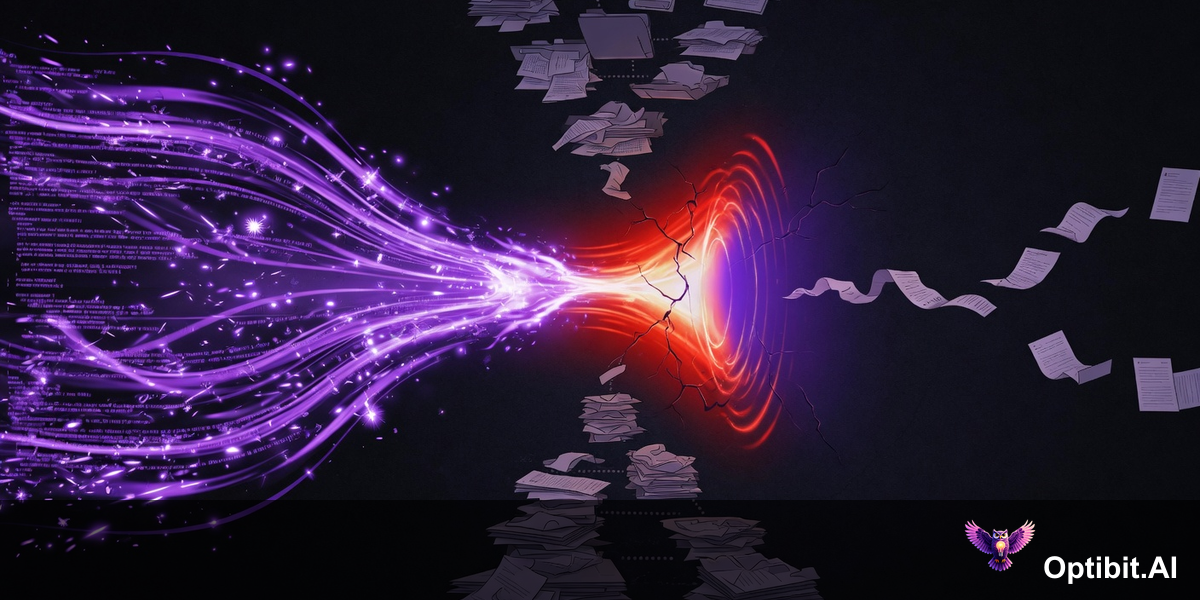
The bottleneck doesn't form all at once. It forms gradually through decisions that each seem reasonable on their own.
First, the TW team starts triaging. Not every feature gets full documentation; only the most important ones do. This is rational under resource pressure. But "most important" is a judgment call made without full product context, and things that matter to specific customer segments get deprioritized because the TW team doesn't have visibility into who uses what.
Second, engineering starts writing their own docs. Not because they want to, but because waiting two weeks for a feature to get documented is a support burden they can't absorb. The result is technically accurate but written for engineers, not users. Nobody reviews it for consistency, terminology, or alignment with existing documentation standards. The quality bar erodes in ways that accumulate invisibly.
Third, product managers start writing release notes. Again, not by choice. They write them because the feature shipped and someone has to communicate it to customers. The notes are functional but inconsistent. They use different terminology than the docs. They reference features by internal names that customers don't recognize. The documentation ecosystem fragments.
By the time leadership notices the documentation quality problem, it has been building for months. The TW team is blamed for being slow, when the actual problem is that the workflow never scaled to match engineering velocity. The team is working at full capacity. The capacity just isn't enough for the new throughput.
The Fork: Two Versions of the TW Role in 2026
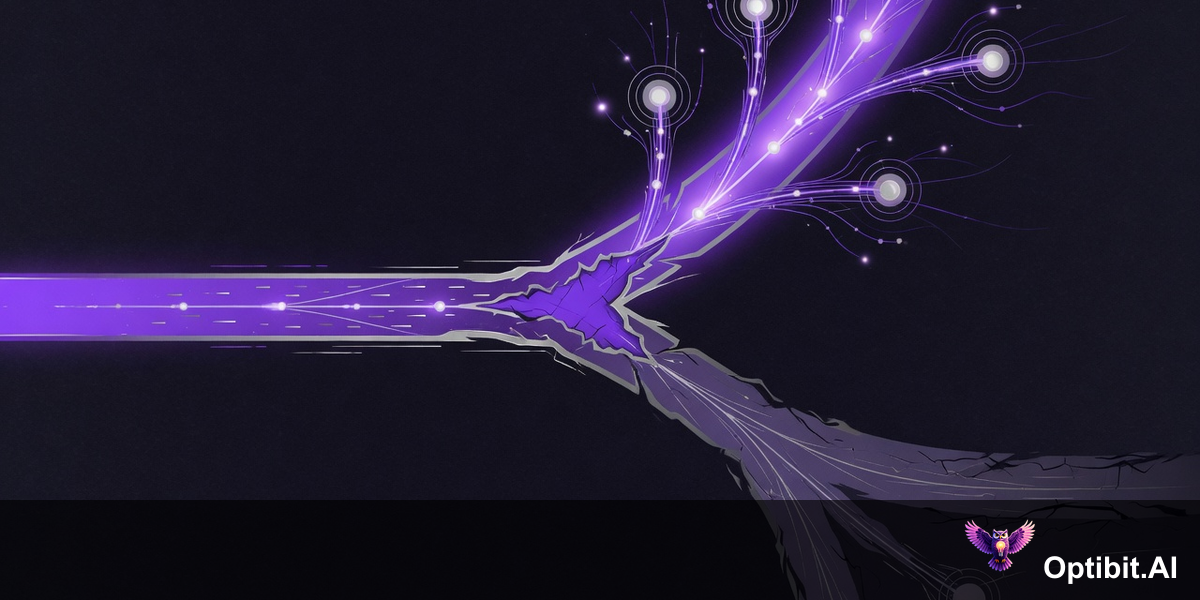
The fork in the TW role is not a future possibility. It is happening now, inside organizations, between teams, sometimes between individuals on the same team. Two recognizably different versions of the technical writer role are emerging.
The AI Orchestrator
Uses AI to generate first drafts from source material: PRs, tickets, commit messages, internal specs. Spends time on accuracy review, terminology consistency, structural editing, and standards enforcement. Manages the content pipeline rather than writing every word. Output scales with engineering velocity because throughput is no longer bounded by writing speed. Becomes more valuable as velocity increases because quality control becomes harder, not easier, at scale.
The Manual Bottleneck
Writes every word from scratch. Reviews every draft personally before it publishes. Operates on a queue that grows faster than it clears. Gets bypassed by engineering and product teams who can't wait. Defends quality standards that are increasingly irrelevant because the content getting published outside the TW workflow has no standards at all. Eventually, leadership questions the ROI of a function that is slower and more expensive than the workarounds that replaced it.
The uncomfortable truth is that many TW professionals are on the bottleneck path not because they lack skill, but because their organizations haven't given them the tools or mandate to change how they work. And some are on the bottleneck path because they've decided that AI-generated content is beneath the quality standard they've spent a career building. Both are real. Both lead to the same outcome.
Dismantling the Quality Myth
The most common objection to AI in technical writing is a quality argument: AI-generated documentation is inaccurate, generic, and reflects none of the product-specific knowledge that makes good docs actually useful. This objection is not wrong. It is incomplete.
Ungrounded AI, given a vague prompt and no product context, produces exactly the kind of documentation the objection describes. Generic, plausible-sounding, and wrong in ways that are hard to catch if you don't already know the product. That is a real problem with a specific cause: the AI was not given the source material it needed to be accurate.
Grounded AI, given the actual PR diff, the internal feature spec, the relevant existing docs as context, and a clear output format, produces something different. It produces a structurally complete first draft that is factually anchored to what was actually built. It may need editing. The terminology might need adjustment. A human reviewer still needs to catch edge cases. But it is not starting from nothing, and the time to publication compresses from days to hours.
There is a second quality problem worth naming directly: the quality of documentation being produced outside the TW workflow when the team is bottlenecked. Engineer-written docs with no style guide, inconsistent terminology, missing prerequisites, and no user-context framing. These get published because waiting for TW costs too much. The alternative to AI-assisted TW is not human-written excellence. It is engineer-written pragmatism without standards. That is the real comparison.
The Tools vs. Workflow Problem
Most TW teams that have experimented with AI have done it by adding AI writing tools to their existing workflow. A writer opens a doc, switches to an AI assistant, generates some text, pastes it in, edits it. The AI is a faster blank page. The workflow is unchanged.
This approach delivers marginal efficiency gains on individual docs but does nothing about the structural problem: the throughput is still bounded by how many documents a person can manage at once. The queue still grows. The bottleneck persists.
The workflow problem is upstream of the tools problem. The question isn't "which AI writing tool should I use?" The question is "where in the content creation pipeline should AI operate, and what triggers it?" Those are architectural questions, not tool selection questions.
A TW team that has answered the architectural question looks different. Documentation generation is triggered by engineering events: a PR merges, a feature flag flips, a release tag is cut. The AI pulls the relevant source material automatically. A draft appears in the TW team's review queue, pre-structured, pre-grounded in the actual change. The writer reviews, edits, approves, and publishes. The trigger-to-publish cycle is hours, not weeks. The writer's attention is on quality, not generation.
This requires integrating with the engineering workflow, not just the writing workflow. The source of truth for what was built lives in the repository. Connecting documentation to that source is a technical decision as much as a content decision. TW teams that make it become the quality layer in an automated pipeline. TW teams that don't remain the creation layer in a manual one, and the math eventually doesn't work in their favor.
What AI Orchestration Actually Looks Like for TW
AI orchestration for technical writing is not a single tool or a single workflow. It's a set of decisions about where human attention is most valuable and where AI can handle the mechanical work without sacrificing accuracy.
Source-anchored generation. Every documentation draft starts from a specific source: the PR, the spec, the ticket, the API schema. AI generates the draft using that source as grounding. The writer reviews the draft against the source, not against their memory of what a feature is supposed to do. Accuracy is checkable because the source is explicit.
Standards as inputs, not reviews. Terminology lists, style guides, and structural templates are fed into the generation process as inputs rather than applied during manual review afterward. The AI produces content that already conforms to the organization's standards. The writer's review catches edge cases rather than applying standards from scratch.
Pipeline visibility over queue management. An orchestrating TW team sees what's coming before it arrives. When a PR merges, the TW pipeline knows a documentation task exists before anyone files a ticket. The team works from a generated queue tied to engineering events, not a manual intake process where someone has to remember to notify docs.
Review as the core skill. The highest-value skill in an AI-orchestrated TW workflow is not writing. It's reviewing: knowing what's wrong about a generated draft, knowing what context the AI missed, knowing when a factually correct statement is practically misleading. That is irreplaceable human judgment. It is also faster than writing, which means one reviewer can cover more surface area than one writer in the old model.
Where to Start This Week
The gap between understanding the problem and changing the workflow is where most TW teams get stuck. The orchestration model sounds compelling but requires decisions that feel large: what tools, what integrations, who owns what, how does review get measured. These feel like organizational problems that require organizational buy-in before anything can change.
They don't have to be. The shift can start smaller than it feels.
Start with one feature type that repeats: API updates, configuration changes, new UI flows. Pick the one that creates the most backlog and where the source material (the PR, the spec) is most consistent. Build a single generation experiment: take the last five PRs of that type, generate a draft from each using whatever AI tool your team has access to, and review them against the published docs. Measure how much editing they needed versus how long it would have taken to write from scratch.
That experiment gives you data. Data changes the organizational conversation from "should we do this?" to "how much faster are we willing to get?" It also gives the TW team something concrete to point to when engineering asks why documentation is a week behind the latest release.
The second step is connecting to the source. If drafts are generated from PR descriptions rather than from memory or intake forms, accuracy improves and the generation can eventually be triggered automatically. That requires a conversation with engineering about access to the repository and about what a PR description should include to make it useful for documentation. That conversation is worth having. Engineering wants docs to be current. Giving them a small upstream behavior change in exchange for faster, better downstream documentation is a trade most engineering teams will take.
The TW teams that start this now will own the documentation quality layer at a company operating at AI velocity. The ones that wait will still be clearing a backlog in 2027, explaining to leadership why the docs are three months behind the product. The choice is structural, not individual. But it starts with individuals deciding which path they're on.
Try Optibit.AI to connect your documentation workflow directly to your engineering repos, so every feature that ships generates a grounded draft before anyone files a ticket.