
The Sales Enablement Content Lag: Arming Your Team for Competitive Deals
Your engineering team ships a capability that directly neutralizes your biggest competitor's core advantage. The feature is real. The differentiation is genuine. But six weeks later, your sales reps are still losing deals to that competitor because nobody updated the battle card, the objection guide still references the old limitation, and the competitive teardown on the sales portal describes a version of your product from last quarter.
The feature exists. The win should be happening. It is not, because the intelligence your reps rely on in the room has not caught up to the product they are selling.
This is the sales enablement content lag. It is not a training problem, a motivation problem, or a hiring problem. It is a content operations problem with a specific, measurable cost: competitive deals lost to information that expired before the rep ever walked into the call.
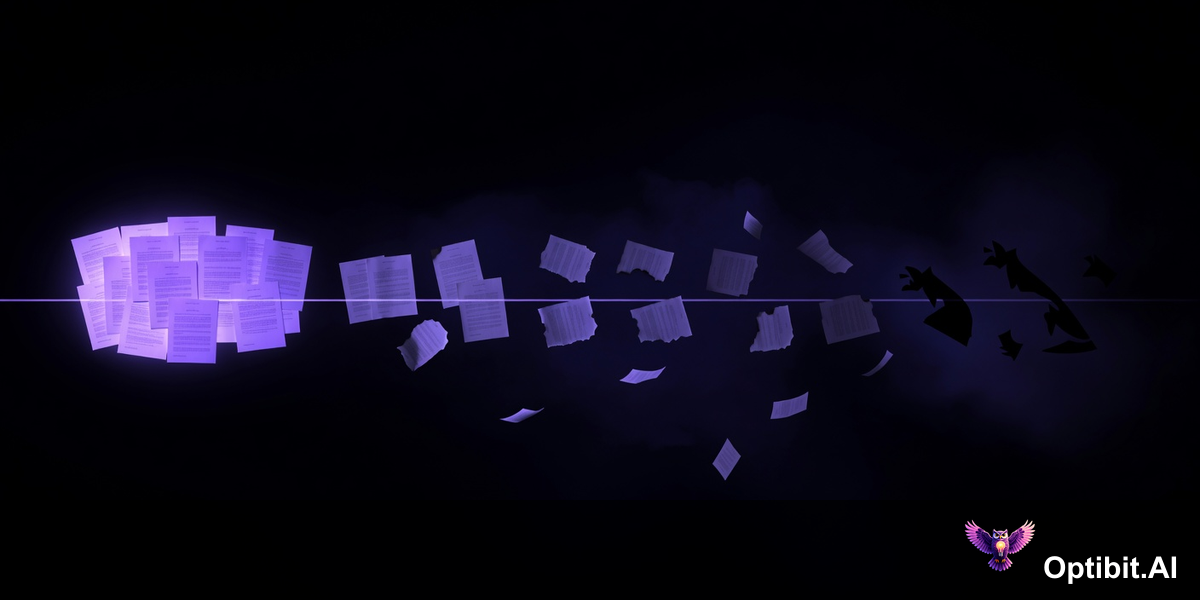
The problem gets worse as competition intensifies. When one competitor was moving slowly, stale battle cards were survivable. When every competitor is shipping weekly and repositioning quarterly, the half-life of sales enablement content collapses. What was accurate 90 days ago is now actively misleading.
Contents
- The Sales Enablement Arsenal
- How Fast Each Artifact Decays
- The Competitive Cost of Stale Intelligence
- Why the Update Pipeline Breaks
- Battle Cards: The Highest-Stakes Artifact
- Objection Guides: Where Stale Content Loses Deals
- Competitive Teardowns: The Slowest to Update
- Building an Update Pipeline That Keeps Up
The Sales Enablement Arsenal
Most conversations about content freshness focus on external-facing material: release notes, blog posts, the docs site. Those matter. But sales enablement content is a parallel universe of artifacts that sits entirely inside the organization, largely invisible to the content operations teams responsible for keeping everything else current.
A reasonably well-equipped sales organization maintains at minimum six distinct categories of enablement content:
Battle Cards
Head-to-head comparison guides for specific competitors. Used in live competitive deals to handle objections and position differentiation.
Decay rate: Very fast
Objection Guides
Scripted responses to common prospect objections. Organized by objection category: pricing, integration, security, capability gaps.
Decay rate: Fast
Competitive Teardowns
Deep analysis of competitor products: features, pricing, positioning, weaknesses. Used for deal strategy and rep onboarding.
Decay rate: Fast, rarely updated
Discovery Scripts
Qualifying questions and talk tracks for discovery calls. Must reflect current product capabilities to set accurate expectations.
Decay rate: Moderate
Win/Loss Analysis
Post-deal summaries capturing why deals were won or lost. Inform objection guides and battle cards but are rarely synthesized systematically.
Decay rate: Slow to generate
ROI Calculators and Case Studies
Quantified value justifications tied to specific product capabilities. Go stale when capabilities change or new benchmarks emerge.
Decay rate: Moderate
Each artifact type has a different owner, a different update cadence, and a different surface area for staleness. Together they form the complete intelligence picture a rep needs to win a competitive deal. When any one of them lags, the system breaks down at exactly the moment it matters most: when a prospect is choosing between you and a competitor.
How Fast Each Artifact Decays
Not all enablement content decays at the same rate. The decay rate depends on two factors: how often the underlying reality changes, and how long it takes the content to reflect that change.
Battle cards and competitive teardowns decay the fastest because they depend on two moving targets simultaneously: your product and your competitor's product. Your competitor ships a new integration that closes a gap your battle card lists as a weakness. Your engineering team ships a capability that eliminates a limitation your objection guide still acknowledges. Neither update triggers an automatic content revision.
Discovery scripts decay more slowly but are particularly dangerous when they do. A discovery script that asks qualifying questions based on capabilities you no longer have (or positions you around a differentiator that no longer exists) sets expectations for a product the prospect will never see. The damage surfaces late in the sales cycle, during a demo or POC, when the mismatch between what was promised in discovery and what exists in the product becomes undeniable.
Win/loss analysis is the rarest to generate and the slowest to synthesize into actionable content. Most organizations capture it inconsistently, and even when captured, it sits in a CRM field or a Notion doc that nobody reads systematically enough to feed insights back into battle cards and objection guides. The intelligence loop that should sharpen sales enablement content over time never closes.
The Competitive Cost of Stale Intelligence
The cost of stale sales enablement content concentrates in competitive deals. Against a sole-source opportunity, the rep can compensate for content gaps through product knowledge and preparation. Against an active competitive evaluation, every gap in the enablement stack is a point of exposure.
Consider the sequence in a typical competitive deal where the content lag matters:
The prospect mentions they are also evaluating Competitor X. The rep pulls up the battle card. It references a capability gap that engineering closed four months ago. The rep either uses the outdated talking point (and looks uninformed when the prospect pushes back) or wings it (and hopes their product knowledge fills the gap). Neither outcome is acceptable in a deal where the prospect is actively trying to differentiate between options.
The prospect raises a pricing objection. The rep pulls up the objection guide. The suggested response references a packaging option that was restructured in the last pricing update. The rep either delivers a response that does not match current reality or improvises, introducing inconsistency between what the rep says and what the prospect will find when they look it up.
The prospect asks how the product compares to Competitor Y on a specific integration. The rep refers to a competitive teardown that was last updated before Competitor Y's latest release. The rep confidently describes a weakness that Competitor Y has already addressed. The prospect knows this, because they just came from a demo with that competitor. The rep's credibility takes a hit it may not recover from.
Each of these failure points is not a rep performance problem. It is a content operations problem. The rep did exactly what they were supposed to do: they used the tools the organization provided. The tools were wrong.
The Scope of the Problem
Sales reps spend an average of 4 to 6 hours per week searching for or creating their own content because the official enablement materials do not reflect current reality. That time is not spent selling. It is spent compensating for a content operations failure that the organization has not named, measured, or addressed as a system.
In competitive markets where deal cycles run 60 to 90 days, the battle cards and teardowns a rep uses at the start of a deal may be describing a product that neither yours nor your competitor's team will recognize by the time the deal closes.
Why the Update Pipeline Breaks
Sales enablement content fails to stay current for a structural reason: it sits outside the primary content update loop.
When engineering ships a feature, the primary update chain typically runs: product notifies marketing, marketing updates the website and publishes content, docs updates the help center. That chain, imperfect as it is, at least exists. There is a handoff mechanism, even if it is slow.
Sales enablement content sits downstream of that chain, operated by a different team (sales ops, revenue ops, or an enablement function), with a different tool stack (Highspot, Showpad, Confluence, Google Drive, or some combination), and a different update cadence that is rarely tied to the product release calendar. The signal that something changed in the product does not reliably reach the person responsible for updating the battle card.
The competitive intelligence layer compounds this. Keeping competitive teardowns current requires monitoring competitor releases, pricing changes, and positioning updates, in addition to your own product changes. That is a significant research burden that most organizations assign informally to product marketing, if at all. The competitive teardown gets a major update when someone has time, which means it gets updated once or twice a year regardless of how often the competitive landscape shifts.
Battle Cards: The Highest-Stakes Artifact
Battle cards deserve special attention because they are the artifact most likely to be referenced in a live deal, under pressure, with no time to verify accuracy.
A good battle card has three components: a crisp summary of why you win against this specific competitor, a list of the competitor's most commonly cited advantages and how to reframe or neutralize each one, and your genuine differentiators stated in terms the prospect cares about. All three components require accurate, current product knowledge to be effective.
The reframe section is where staleness causes the most immediate damage. If the battle card says "Competitor X does not support [integration]" and Competitor X shipped that integration in their last release, a prospect who knows this will catch the error in real time. The rep looks either uninformed or deliberately misleading. Neither reading helps close the deal.
Keeping battle cards current requires a direct connection between your product release process and the competitive enablement update workflow. Every release that touches a capability listed on a battle card, on either side of the comparison, should trigger a review of that card. In practice, this connection almost never exists. Battle cards are created in a sprint, published, and then treated as finished documents until someone notices they are wrong.
What a current battle card process looks like
The most effective competitive sales organizations treat battle cards as living documents with explicit owners, explicit expiration dates, and a clear trigger for updates: any product release affecting a capability cited in the card. The update is not optional and is not left to someone's initiative. It is a scheduled output of the release process, the same as release notes or a blog post.
Teams that have implemented this report a measurable improvement in competitive win rates, typically cited at 15 to 25%, not because the reps got better at selling, but because they stopped losing on correctable information gaps.
Objection Guides: Where Stale Content Loses Deals
Objection guides are underrated as a staleness risk because they feel more durable than battle cards. A rep's response to "your price is too high" or "we already have a solution" seems like it should not change much as the product evolves. In categories with stable pricing and stable competitive positioning, that is true. In categories with rapid product development and active competition, it is not.
The objections that matter most in competitive deals are capability-specific: "Your product does not support [X]," "We heard you have problems with [Y]," "Competitor Z just launched [feature] and you don't have it." These are the objections where an accurate, confident response closes the deal and an incorrect or hedged response loses it.
Capability-specific objections require the objection guide to reflect the current product. If the product shipped a response to a known objection (an integration, a compliance certification, a performance benchmark), that response needs to be in the guide before the rep encounters the objection in a deal. After is too late.
The update trigger for objection guides should be the same as for battle cards: any release that addresses a capability gap, resolves a known customer complaint, achieves a certification, or changes pricing or packaging should prompt a review of the objection guide entries that reference those areas.
Competitive Teardowns: The Slowest to Update
Competitive teardowns are the deepest artifact in the sales enablement stack and the slowest to update. A thorough teardown of a competitor's product covers features, pricing tiers, integration ecosystem, customer segments, known weaknesses, public reviews, and go-to-market positioning. Building one takes days. Keeping it current takes ongoing attention that most organizations do not formally resource.
The practical consequence is that competitive teardowns are often 6 to 18 months out of date by the time a rep consults them. For a competitor that ships infrequently, this is survivable. For a competitor that is actively investing in product and closing gaps, an 18-month-old teardown is a map of terrain that no longer exists.
The fix is not to build more comprehensive teardowns. It is to build leaner teardowns with more frequent, targeted updates. A teardown that covers the 10 most strategically important dimensions of a competitor's product and is updated quarterly is more useful than a 40-page document that was accurate when it was written and has been silently wrong ever since.
Trigger-based updates help here too. Set up monitoring for competitor release announcements, pricing page changes, and G2 or Capterra review patterns. When a signal fires, update the relevant section of the teardown before the information makes it into a deal where you are not prepared for it.

Building an Update Pipeline That Keeps Up
The common response to stale sales enablement content is to hire an enablement manager and ask them to keep everything current. This works at low shipping velocity. It does not scale. One person, or even a small team, cannot monitor every product release, every competitor update, and every win/loss signal and translate all of it into timely updates across six artifact types. The information volume is too high and the update surface area is too wide.
The only approach that scales is to connect the content update pipeline directly to the sources of change. Your product release record (the pull requests, the release notes, the product specs) contains the ground truth about what changed. Your competitor monitoring stack contains signals about what your competitors changed. Both should flow automatically into a review queue for the specific enablement artifacts that reference the affected capabilities.
This is exactly the kind of pipeline that OptibitAI is built to support. When a release ships, the system identifies which capabilities changed, matches them against the enablement artifacts that reference those capabilities, and generates draft updates for human review. The rep gets a battle card that reflects today's product. The enablement team spends time reviewing and approving, not hunting for what changed and rewriting from scratch.
The goal is not to automate judgment out of the process. A competitive positioning decision still requires a human. But the research, the identification of what changed, and the first draft of the updated content should not require a human to start from zero every time your product or your competitor's product moves.
Sales enablement content is not a one-time project. It is a continuous output of the product development process. Treating it as a project that gets done once and then maintained informally is exactly what produces the gap between the product your engineering team shipped and the product your sales team is selling.
Close that gap, and the deals that were lost to correctable information failures start going the other way.
Try OptibitAI to automatically generate and update sales enablement content from your product releases.