
The Customer Success Blindspot: Your Retention Team Doesn't Know What Shipped
Your customer success team is responsible for the most valuable revenue your company has: the revenue you already earned. Every renewal, every expansion, every upsell starts with a CSM who knows the customer, knows the contract, and ideally knows the product well enough to connect the two. That last part is where it breaks.
Ask your CSMs what shipped in the last two product releases. Not vaguely. Specifically: which features, which workflows changed, which customer pain points were addressed, which competitive gaps were closed. Watch how many can answer with confidence. In most organizations, the number is lower than anyone in leadership wants to admit.
This is not a failing of your CS team. It is a structural information problem that almost every SaaS company has built into its operations without noticing. Engineering ships continuously. The information about what shipped travels to marketing, to sales, sometimes to support. Customer success is almost always last in that chain, and often receives nothing at all beyond a changelog link that nobody reads. The function carrying your NRR does not know what product they are retaining customers on.
That gap has a cost. It shows up in QBRs that miss expansion conversations. In renewals where the customer complains about a problem that was solved three sprints ago. In churn attributable to a feature gap that no longer exists. You are losing revenue that was yours to keep, over information your own engineering team already produced.
CS Is Always Last in Line
When a feature ships, there is a rough sequence in which the organization learns about it. Engineering knows because they built it. Product knows because they specified it. Marketing learns next, often in a sprint review or Slack announcement. Sales learns when marketing produces enablement content, which might be days or weeks later. Customer success learns when someone remembers to tell them, which might be never.
That flow is not a policy decision anyone made. It is the natural gradient of information in an organization structured around acquiring new customers. The entire GTM motion is oriented forward: find new customers, convert them, close the deal. CS comes after the deal. By the time information reaches them, it has been filtered through multiple handoffs, summarized for different audiences, and often delayed by weeks.
The compounding problem: CS has the longest memory requirement of any revenue function. A sales rep needs to know what the product does well enough to close a single deal. A CSM needs to know what the product did twelve, eighteen, twenty-four months ago when this customer bought, what it does now, and how the delta is relevant to this customer's specific situation. They need release-aware product knowledge across the entire tenure of the relationship. Getting a monthly summary in a team meeting is not close to sufficient.
What CSMs Actually Know About the Product
CSMs learn the product through four channels, and each one fails in a specific way at scale.
Onboarding training. CSMs get thorough product training when they join. That training reflects the product as it existed on their start date. Every sprint that ships after that date adds to the delta between what they learned and what the product does. A CSM who joined eighteen months ago trained on a product that shares a name with the current version but has changed substantially since. Nobody has given them a structured update on what is different.
Team meetings and Slack updates. Product and CS leadership share release highlights in team meetings and channels. These summaries are inconsistent, vary in depth based on who is running the meeting that week, and disappear into Slack history within hours. A CSM who was on a customer call during the all-hands catches up from notes that leave out the details they needed. A CSM managing twenty accounts cannot synthesize a five-minute verbal summary into action across all twenty relationships.
The changelog. Most SaaS companies publish a changelog. Most CSMs glance at it when they remember to and ignore it when they are busy, which is always. A changelog written for a technical audience does not translate into talking points a CSM can use in a QBR. It tells them a feature exists. It does not tell them which of their accounts would care, why it matters to that customer's specific situation, or how to bring it up without sounding like they are pushing an upsell.
Asking an engineer or PM. This works exactly once per relationship before both parties find it exhausting. It does not scale to a CS team managing hundreds of accounts across dozens of product releases per year.
The QBR That Misses the Point
The quarterly business review is the highest-leverage moment in a CS relationship. It is the one meeting where the CSM has the customer's full attention, access to decision-makers, and a structured opportunity to demonstrate value and discuss the future. A well-run QBR keeps customers. A poor one accelerates churn.
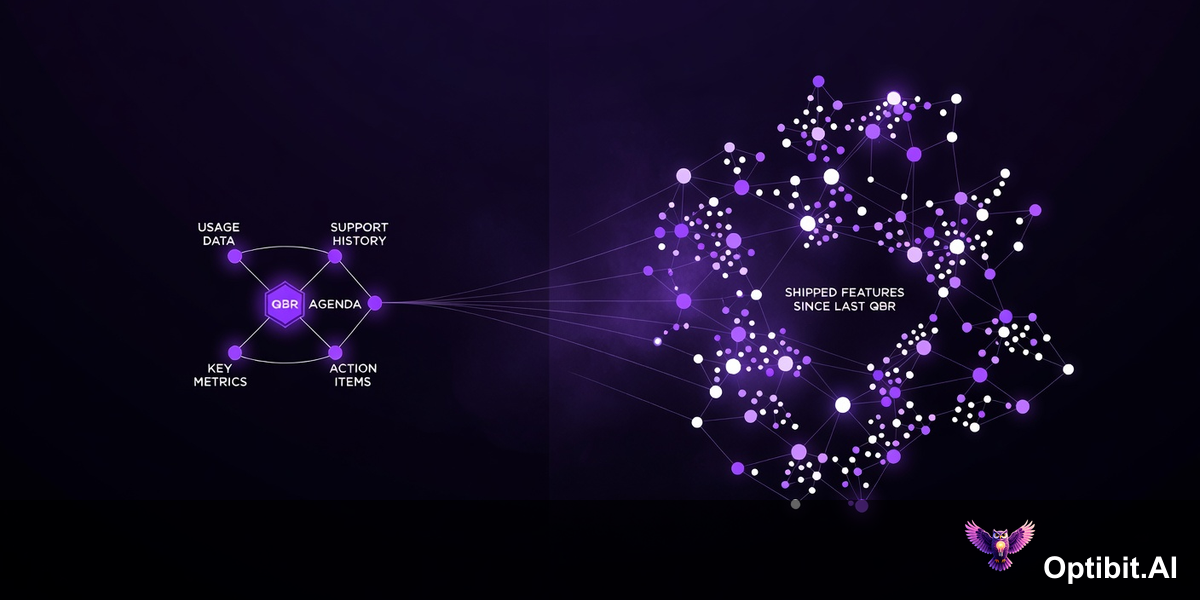
Most QBRs are built around usage data and support tickets. What was used, what broke, what the customer asked for help with. These are backward-looking metrics that tell the customer what they already experienced. They rarely include a structured forward-looking component that says: here is what we shipped in the last ninety days that is relevant to your business, here is what it does for you specifically, and here is the conversation we should be having about where this takes you next.
A QBR that missed the expansion conversation
A CSM is preparing for a renewal QBR with a customer whose contract is up in sixty days. The customer has complained periodically about a specific reporting limitation. The CSM knows about the complaint. What the CSM does not know: engineering shipped an enhanced reporting module six weeks ago that directly addresses it. It is in production. Other customers are using it. It was mentioned in a sprint review that the CSM did not attend and summarized in a changelog entry that described it in technical terms unrecognizable to someone who is not reading code.
The QBR happens. Usage data is reviewed. The customer brings up the reporting limitation again. The CSM notes it for follow-up. The customer renews at flat rate, moderately dissatisfied. Three months later, the customer's power user discovers the new reporting feature independently, asks the CSM why they were not told about it at the QBR, and the relationship takes a hit it did not need to take.
The expansion conversation that could have happened at renewal, did not. The upgrade that the customer would have paid for, was not discussed. The CSM was not incompetent. They were uninformed.
The Expansion Revenue That Evaporates
Expansion revenue is the most efficient revenue in SaaS. The customer already trusts you. The procurement process is faster. The champion is already internal. The cost of acquiring expansion revenue is a fraction of the cost of acquiring new logo revenue. And yet most organizations leave the majority of their expansion opportunities on the table because the CSM is not equipped to surface them.
Expansion happens when a customer realizes the product can solve a problem they have not yet paid to solve. That realization almost never happens on its own. Customers do not monitor your changelog looking for upsell opportunities. They are running their business. The CSM is supposed to be the bridge: knowing both the customer's situation and the product's current capabilities, and connecting them.
That bridge requires the CSM to know what the product can do today. Not what it could do when the customer signed. Today. A CSM who is not current on product capabilities cannot have the expansion conversation even when the customer's situation clearly calls for it. They are flying blind over a landscape of revenue opportunities they cannot see.
The Churn You Could Have Prevented
Churn is the most studied problem in SaaS and the one with the most misattributed causes. Win-loss analysis for churn looks at price sensitivity, competitor moves, executive sponsorship changes, and budget cuts. These are real factors. But sitting underneath many churn events is a simpler failure: the customer lost faith in the product's ability to solve their problem at a moment when the product had already solved it.
The churn that did not have to happen
A mid-market customer has been struggling with a specific integration limitation for two quarters. They have submitted support tickets. They have mentioned it to their CSM. The CSM has dutifully logged it and passed it to product. Engineering prioritized and shipped a fix four weeks ago. The fix went out in a release, described in the changelog as "improved third-party connector reliability." The CSM did not register the connection between that entry and the customer's specific complaint.
Two weeks later, the customer submits a cancellation request. Their stated reason: the integration limitation is blocking them and they have found an alternative. The CSM gets the cancellation alert, reaches out immediately, and learns for the first time that the issue was actually resolved a month ago. By then, the customer has already signed with the competitor and the relationship is unsalvageable.
This is not an edge case. In organizations that have done careful churn analysis, a meaningful percentage of voluntary churn traces back to customers leaving over problems the product had already addressed. The customer did not know. The CSM did not know. The engineering team shipped the fix. Nobody closed the loop.
The NRR Math
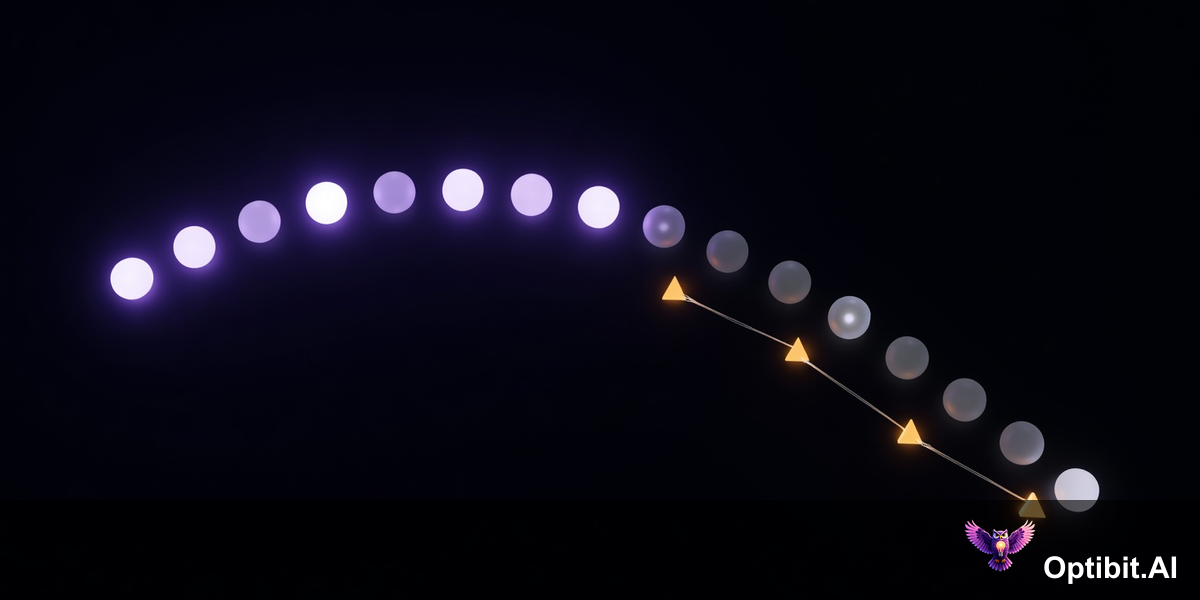
Net revenue retention is the metric that most directly captures the CS blindspot cost. NRR below 100% means the business is shrinking from its existing customer base regardless of how much new revenue sales brings in. NRR above 110% means the business grows even if sales closes nothing. Every point of NRR is worth more than any comparable point of new logo conversion rate, because it compounds across the entire customer base rather than applying only to new deals.
The CS blindspot attacks NRR from both directions simultaneously. On the contraction side: customers who churn or downgrade over problems already solved. On the expansion side: customers who stay at flat rate when they would have upgraded if the CSM knew which features to bring to the conversation. The expansion opportunity is missed quietly. The churn shows up loudly. Both trace back to the same root cause.
A CSM who is consistently one or two product releases behind on their knowledge is not missing small opportunities. At a $2M book of business, a two-percentage-point NRR improvement is $40,000 in retained and expanded revenue per CSM per year. Across a team of ten CSMs, that is $400,000. Not from hiring more people. Not from a new product feature. From the CSM knowing what the product already does.
Closing the Blindspot
The fix is not more training sessions. Training happens on a schedule; releases do not. A quarterly product training keeps CSMs one quarter behind at best and three quarters behind when training gets deprioritized, which it always does when pipeline pressure builds.
The fix is release-aware enablement delivered at the moment of shipping. When a feature merges, the CS team needs a structured brief that does three things training cannot do. First: it names the specific customer pain points the release addresses, in language that matches how customers describe those problems, not how engineers describe the solution. Second: it identifies the account types and situations where this release is most relevant, so the CSM can map it immediately to their book of business. Third: it arrives at the pace of shipping, not the pace of training calendars.
This is what separates a CS team that retains and expands from one that merely manages accounts. The first team knows what the product does today. The second team knows what it did at their last training. In a market where engineering ships weekly, that gap grows fast.
OptibitAI generates the CS-facing release brief alongside every other GTM artifact at the moment of shipping. The CSM gets the same timely, translated product intelligence that sales gets: what shipped, why it matters for customers, and which conversations it should change. QBRs stop missing expansion opportunities. Renewal conversations address problems that were already solved. The information that was always there, in the repository, finally reaches the team that needs it most.
Your CS team is not failing. They are working without the information they need to win. Give them that information and see what changes.
Try OptibitAI to close the CS blindspot and put your NRR on the right side of the math.