
AI Assistants Are Your First Salesperson. Is Your Content Ready?
Something changed in the buyer journey and most GTM teams haven't noticed yet. Before a prospect books a demo, before they fill out a contact form, before they even visit your pricing page, they ask an AI assistant. They type something like "what's the best tool for converting release notes into sales enablement content?" and an AI gives them an answer. That answer shapes their shortlist. In many cases, it ends the search.
Your sales team never got a chance to pitch. Your SDR never sent the first email. The AI already ran the evaluation and you either made the cut or you didn't. What determined the outcome wasn't your deck or your case studies. It was the quality, recency, and structure of your public product content: your changelog, your docs, your blog, your release notes. The AI read all of it and formed an opinion.
This is the new first touchpoint. It runs 24 hours a day, never has a bad quarter, and doesn't respond to coaching. You cannot control it directly. You can only feed it good content or bad content. Most B2B SaaS companies are feeding it bad content right now, and they have no idea.
Contents
- How AI Builds Its Answer About Your Product
- The Content That Gets Read (and What Gets Ignored)
- What Stale Content Actually Costs You in This Channel
- The Velocity Mismatch at the Root of the Problem
- What AI-Ready Product Content Looks Like
- MCP and the Shift to Structured Product Context
- Closing the Gap Before Your Competitor Does
How AI Builds Its Answer About Your Product
When someone asks Claude or ChatGPT about a category of software, the model synthesizes from multiple sources. Training data is part of it, but that has a cutoff date. More importantly for your product, AI assistants now retrieve live content through web search integrations, read indexed pages, and in some cases connect directly to product data through protocols like MCP (Model Context Protocol). The answer a buyer gets isn't pulled from a single authoritative source. It's constructed from whatever product information is publicly accessible, crawlable, and coherent enough to parse.
That means a few things work for you and many things work against you. If your product page describes what you built two years ago, the AI describes a two-year-old product. If your changelog hasn't been updated since February, the AI doesn't know about the features you shipped in March, April, and May. If your docs use vague language or cover edge cases but not core use cases, the AI learns vague things about your product and teaches those vague things to your prospects.
Conversely, if your changelog is detailed and current, if your docs explain who the product is for and what problems it solves in plain language, if your release notes connect new features to customer outcomes rather than just listing function names, the AI builds an accurate and compelling picture. It recommends you. It uses your language. It frames your differentiators correctly. That's a distribution advantage that compounds every time someone asks.
The Content That Gets Read (and What Gets Ignored)

Not all public content is weighted equally by AI systems. A few content types matter more than others for product discovery.
Changelogs and release notes
Structured, frequent, and factual. When you ship a feature and document it clearly, that documentation becomes part of the AI's understanding of what your product does today. A sparse changelog tells the AI this product doesn't move fast.
Use-case documentation
Not the API reference, but the outcome-oriented docs: who uses this feature, what problem does it solve, how does it fit a workflow. This is where the AI learns to answer "is this right for my situation?"
Blog posts and case studies
They teach the AI your positioning and category claims. A buyer asking "how does tool X help sales teams?" gets a better answer about you if you've written specifically about that use case.
What gets ignored
Internal wikis, gated PDFs, anything behind a login wall, and content that isn't indexed. The content your team considers secondary is actually primary for this channel.
This matters because the content your team considers secondary, the changelog no one really maintains, the docs that haven't been touched since the feature launched, the release notes written by an engineer in five minutes on a Friday afternoon, is the content the AI is reading first. If it's thin, the AI's understanding of your product is thin.
What Stale Content Actually Costs You in This Channel
The cost of stale content in traditional channels is fuzzy and delayed. A prospect reads a six-month-old case study and maybe it's slightly off, but they still book the demo and your sales team can correct the narrative in real time. The feedback loop is slow but recoverable.
With AI as the first touchpoint, the cost is front-loaded and often invisible. The buyer asks the AI, gets an incomplete or outdated picture of your product, and either eliminates you from the shortlist or never adds you in the first place. You never get the chance to correct it. You don't know it happened. The CRM shows no activity, no lost deal, nothing. It's a phantom loss.
There's a third cost that compounds over time: category definition. Early in a category, the companies that produce the most coherent, consistent, high-quality content about the problem space shape how AI models understand the category itself. The language they use, the frameworks they introduce, the problems they name: all of that becomes part of how the AI explains the space to every future buyer. Getting there early with good content isn't just a quarterly win. It's a durable positioning advantage.
The Velocity Mismatch at the Root of the Problem
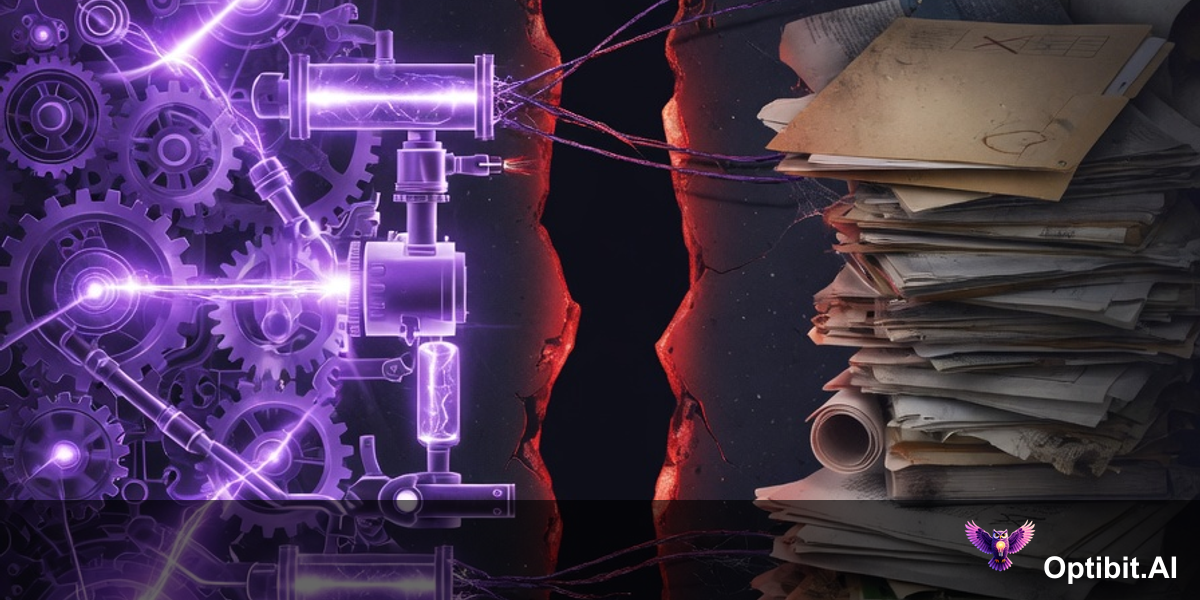
Most B2B SaaS engineering teams now ship on weekly or biweekly cycles. Some ship daily. The features are real, tested, and in production. But the content that describes those features, that connects them to buyer problems, follows a completely different clock. Marketing and product marketing operate on quarterly planning cycles. Documentation is a backlog item. Release notes are written by engineers in five minutes on a Friday afternoon because someone asked them to.
The result is a persistent lag. At any given moment, the public-facing description of your product is behind the actual product by weeks or months. In traditional channels this lag is visible and annoying but manageable. Your sales team mentions features that aren't in the deck. Your website describes workflows that changed in Q2. Friction, but recoverable friction.
In the AI discovery channel, this lag is lethal. The AI only knows what you've published. It can't call your sales team to ask about the new feature. It can't look at your demo environment. It reads what you wrote, and if you wrote it three months ago, that's the product it describes. Meanwhile your competitor shipped twice in the last six weeks and documented every change. The AI knows their product better than it knows yours, not because their product is better, but because their content is current.
This is the same velocity mismatch covered in other contexts on this blog: the GTM bottleneck paradox, the content debt spiral. But the AI discovery channel raises the stakes because the gap between what you ship and what you document now has a direct, immediate effect on whether buyers find you at all.
What AI-Ready Product Content Looks Like
AI-ready content isn't a new content format. It's existing content done well and kept current. A few principles that distinguish it from the default.
Write for the problem, not the feature. Most changelogs and release notes lead with the feature name. "Added bulk export." "New dashboard widget." That tells the AI what exists, but not what problem it solves or who it's for. AI-ready content leads with context: "Teams running weekly reporting can now export all data in bulk instead of downloading individually." Now the AI can answer "does this tool help with reporting workflows?" correctly.
Use the buyer's language, not the engineer's language. Internal naming conventions, function names, and technical acronyms are not the language buyers use when asking AI questions. If your feature is called "BatchSync" internally but buyers call it "bulk data sync," your content needs to use their terms. The AI pattern-matches on language. If your language doesn't match the query, you don't surface.
Connect features to outcomes explicitly. Don't leave the connection implicit and hope the AI figures it out. State it: "This reduces the time to close a deal by giving reps instant access to..." Explicit outcome language gives the AI the sentences it needs to answer "what are the benefits of this product?" without inventing them.
MCP and the Shift to Structured Product Context
The Model Context Protocol (MCP) is making this dynamic more formal and more consequential. MCP is a standard that lets AI assistants connect directly to external data sources, including product databases, documentation systems, and content APIs, in a structured way. When a company exposes an MCP server, an AI assistant can query their product data in real time rather than relying solely on indexed web content.
This is a distribution channel. Products that expose clean, structured context through MCP or similar integrations will show up in AI-generated recommendations, comparisons, and evaluations with significantly more accuracy and recency than products that don't. It's the same dynamic as SEO in 2005: early adopters who understood the mechanism built durable advantages that laggards spent years trying to close.
The prerequisite for making MCP useful is having clean, structured product content in the first place. You can't expose a well-organized product data feed if your product data is scattered across Notion docs, engineer Slack threads, and a changelog no one maintains. The companies that will win the MCP distribution race are the ones building rigorous content infrastructure now, before the channel matures.
Closing the Gap Before Your Competitor Does
The companies that will win the AI discovery channel are not necessarily the ones with the best product. They're the ones whose product is best described. That's a content operations problem as much as it is a product problem, and it's solvable if you treat it with the same urgency you'd give a conversion rate problem on your homepage.
The path is not to hire a content team and hope they can keep up with engineering. The gap is structural: engineering ships continuously, content teams operate episodically. Manual content processes will always lag a shipping team operating at modern velocity. The gap only closes when content generation becomes part of the build process rather than a downstream task someone schedules for next sprint.
That means automating from the source. Your PRs, your commit messages, your tickets, your internal feature specs contain everything needed to generate accurate, current, buyer-facing content. The knowledge is there. The gap is in the translation and the publishing cadence. Closing it means pulling that knowledge upstream and generating GTM artifacts at the same time you ship the code, not two weeks later when someone finally gets around to the content backlog.
Your competitors are figuring this out. Some of them already have. The AI assistant a buyer asks tomorrow is going to give an answer that reflects the content landscape as it exists right now. The question is whether your product is described clearly, accurately, and recently, or whether your competitor is.
Try Optibit.AI to generate current, buyer-ready GTM content from your repos automatically, so the AI describing your product tomorrow is working from what you shipped today.